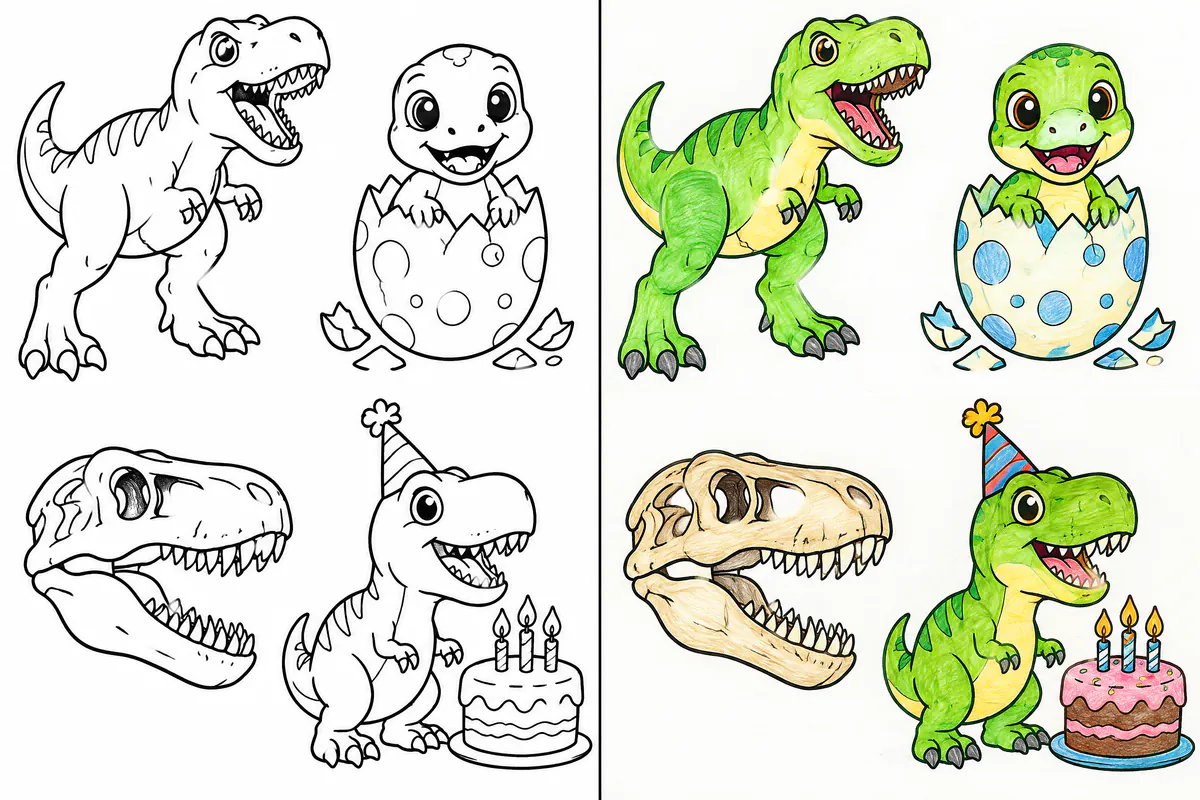
Dinosaur Coloring Pages
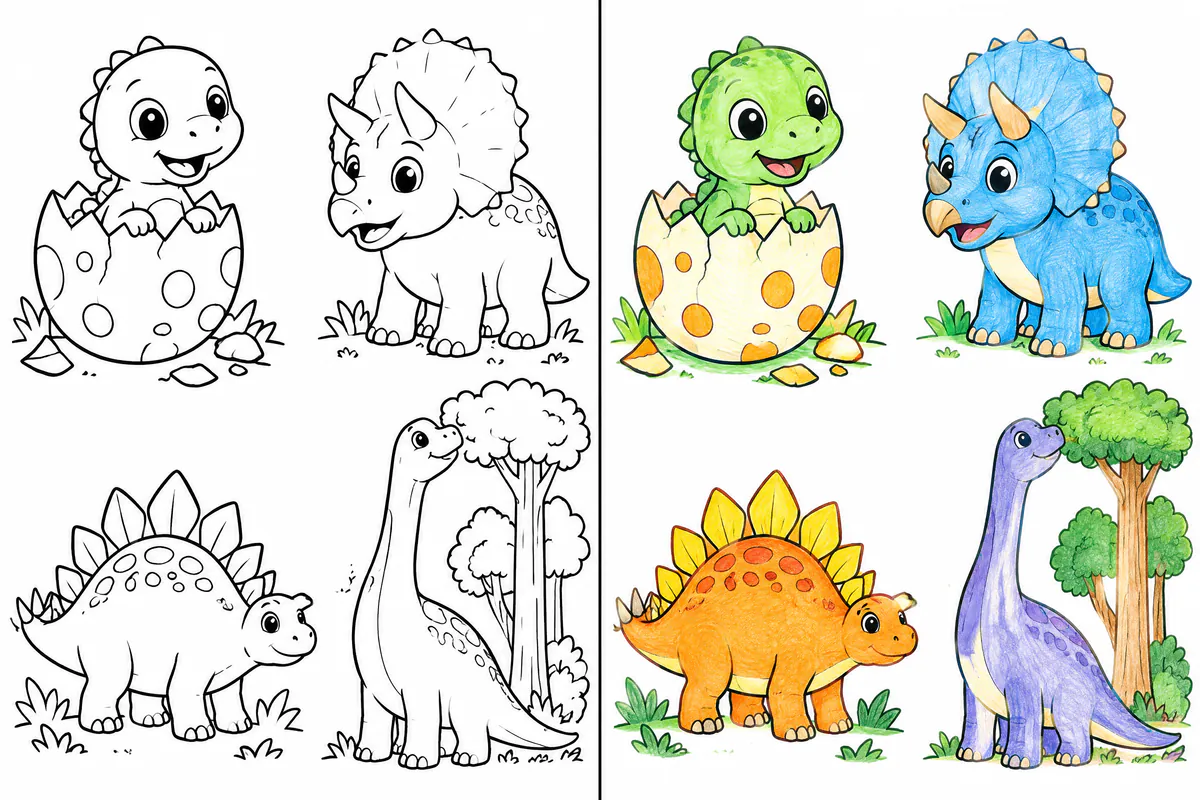
Long before there were coloring pages there were dinosaurs, and these dinosaur coloring pages put them side by side: baby dinos hatching from spotted eggs, a triceratops with a big frill, a stegosaurus with back plates, a very tall brachiosaurus, and meat eaters such as the allosaurus and a velociraptor with feathered arms.
Not every prehistoric creature was a dinosaur, so you will also meet a flying pteranodon, a long-necked plesiosaur, and a diving mosasaurus, plus fossil pages with a museum skeleton, giant footprints, and an ammonite. Earthy greens and browns work well, though a purple triceratops is always welcome. Kids who want the most famous predator can jump to our T-Rex coloring pages, and modern creatures are in the animal coloring pages.
Table of Contents
Cute Baby Dinosaur Coloring Pages
Meet the smallest dinos first: a baby hatching from an egg, a baby triceratops, a smiling brontosaurus, a baby stegosaurus with a flower, one with a balloon, one eating a leaf, and one hugging a plush toy. The big shapes and simple backgrounds are perfect for toddlers and preschoolers.
 EasyNew!
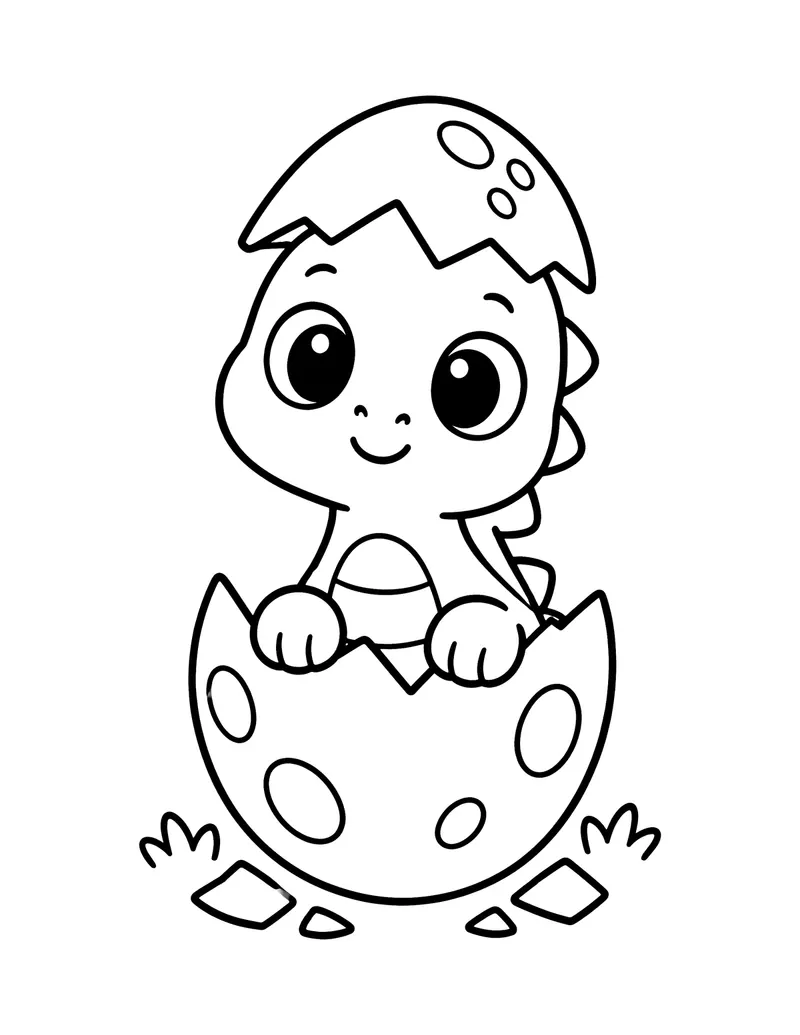
Baby Dino Hatching
A baby dinosaur pops out of a cracked egg with eggshell pieces on its head, big shiny eyes, and a tiny smile, with…
Download PDF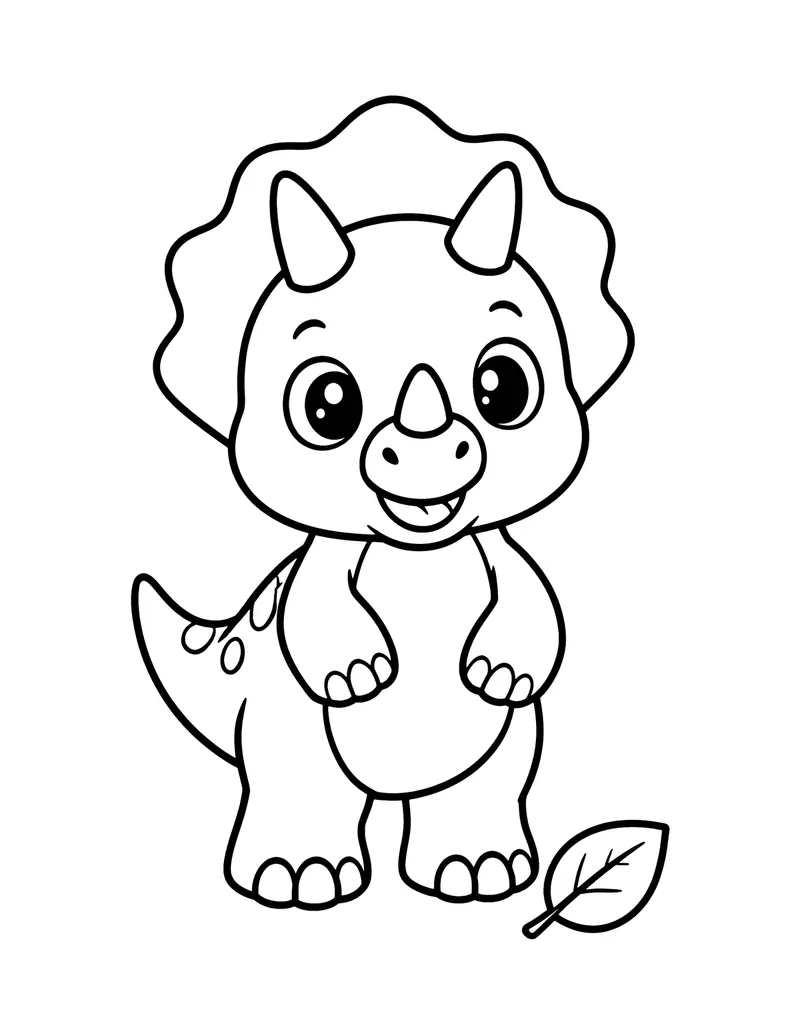 EasyNew!
Baby Triceratops
A cute baby triceratops stands upright with three short horns, a small frill, round feet, and a friendly smile, with…
Download PDF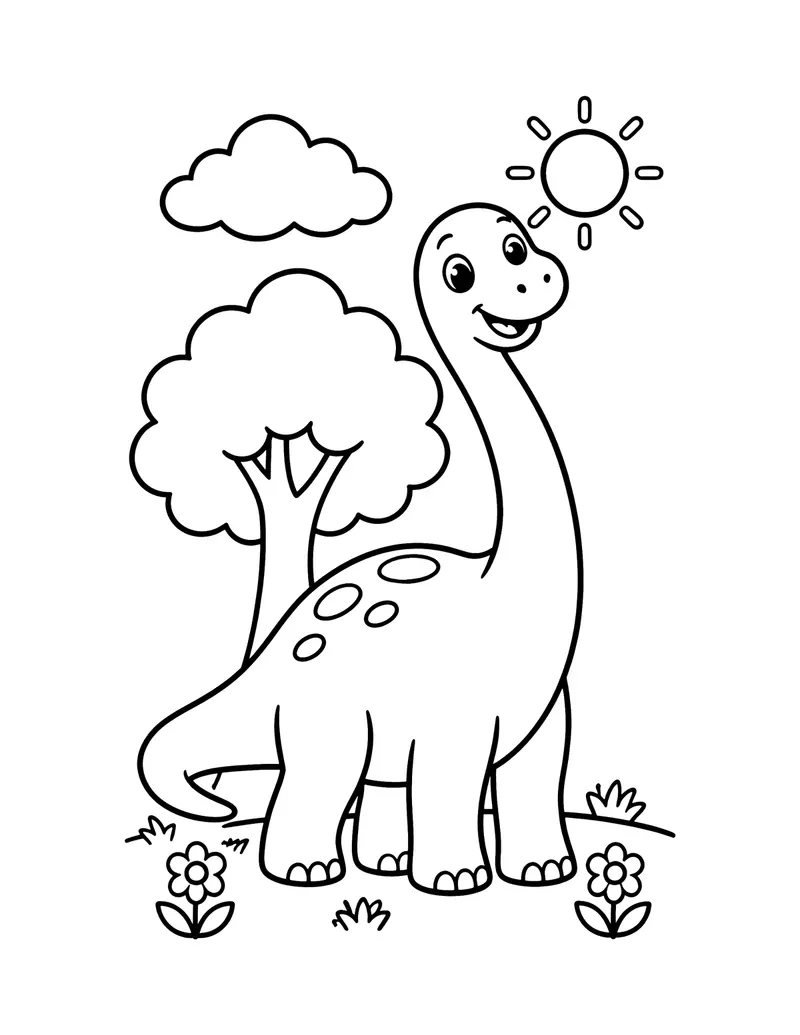 EasyNew!
Smiling Brontosaurus
A friendly brontosaurus has a long neck curving upward and a big smile, with a big tree behind it, a sun and clouds…
Download PDF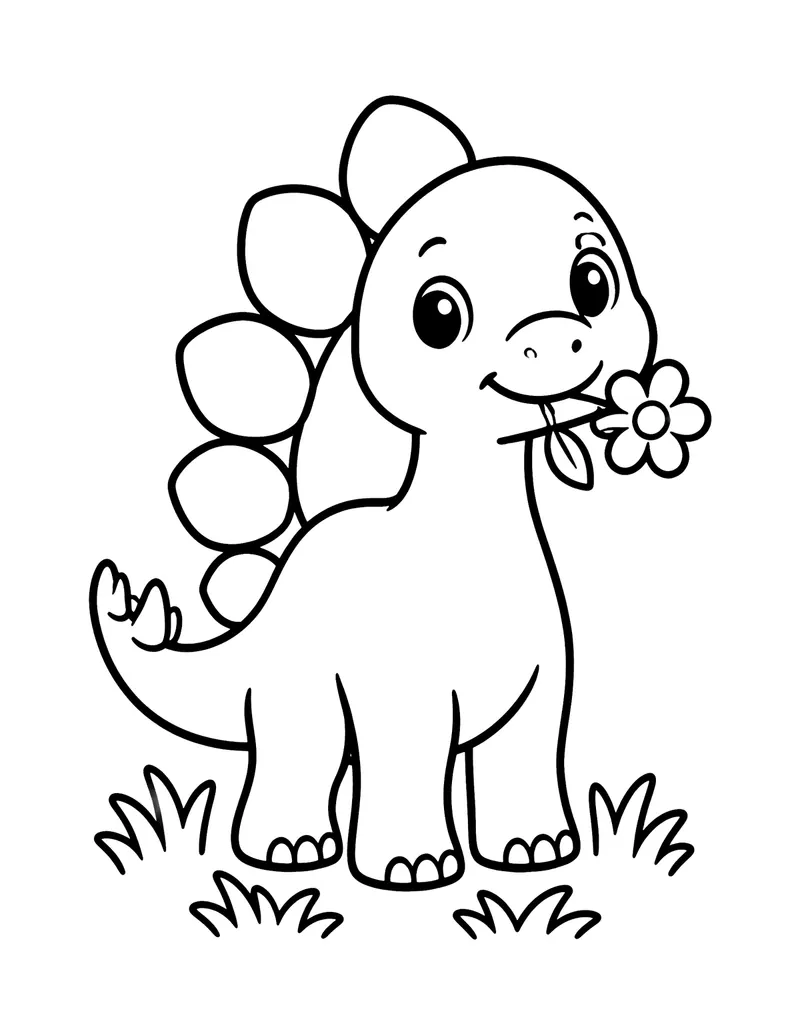 EasyNew!
Baby Stegosaurus with a Flower
A baby stegosaurus stands upright with round back plates and holds a flower in its mouth, with grass below and a…
Download PDF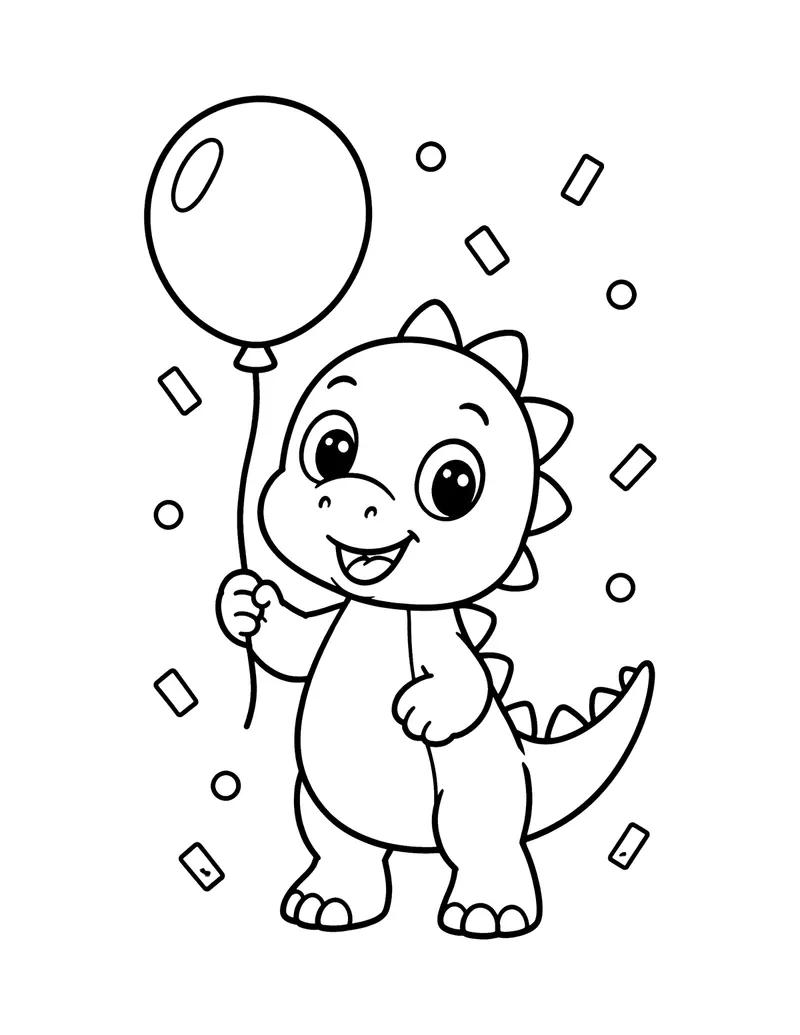 EasyNew!
Baby Dino with a Balloon
A baby dinosaur stands upright holding a balloon by its string, with big eyes, a spiky back, and a tail, and…
Download PDF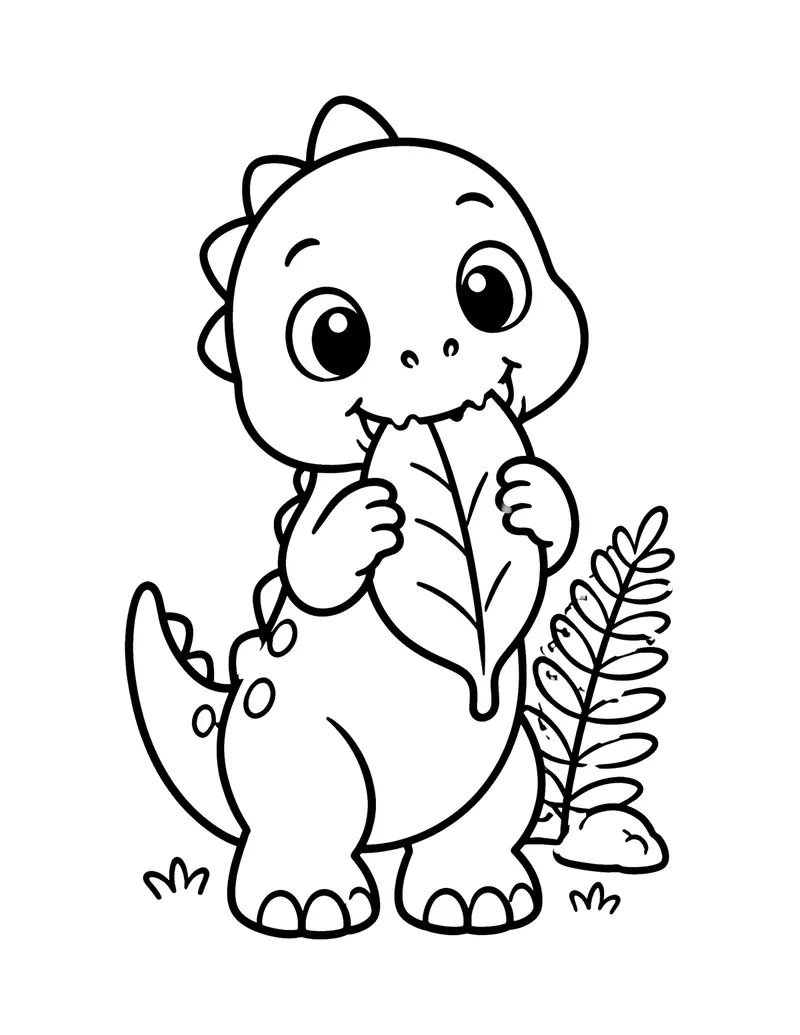 EasyNew!
Baby Dino Eating a Leaf
A baby dinosaur chews a big leaf with both hands, with a fern and a tiny rock behind it and a spiky tail curling at…
Download PDF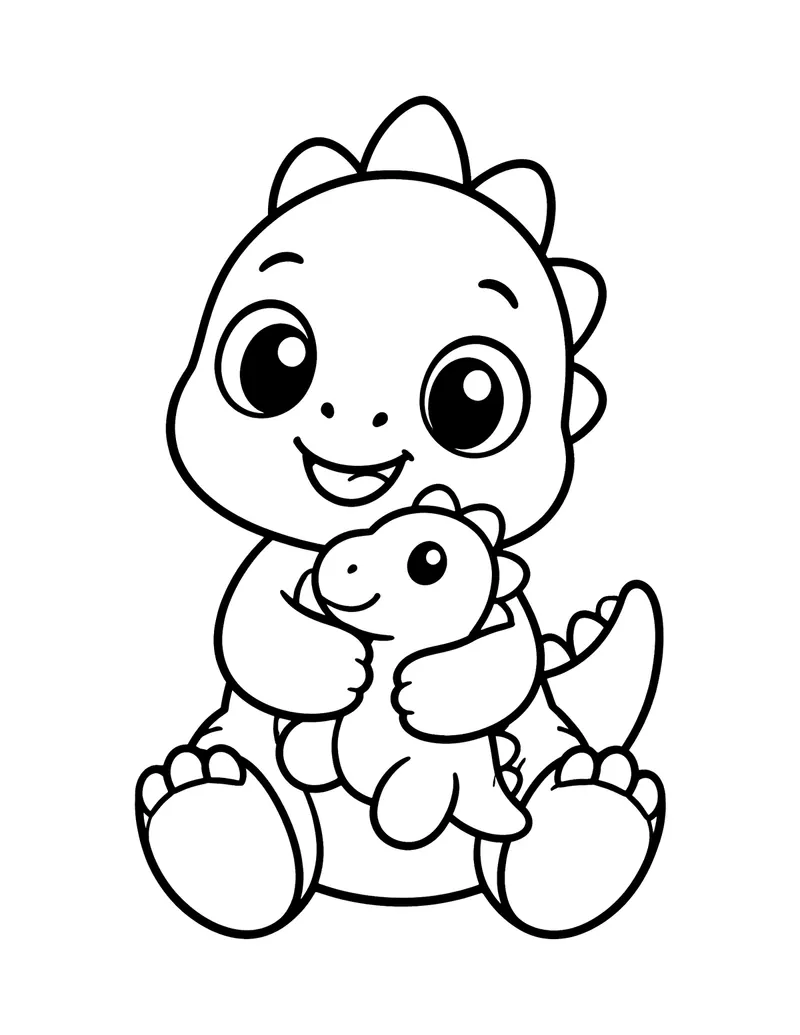
Plant-Eating Dinosaurs to Color
Meet the gentle giants: a triceratops with a big frill, a stegosaurus with back plates, a long-necked brachiosaurus, an armored ankylosaurus, a parasaurolophus with a curved crest, a diplodocus with a whiplike tail, an iguanodon with thumb spikes, and a dome-headed pachycephalosaurus. Each has its own shape for school-age kids to explore.
 EasyNew!
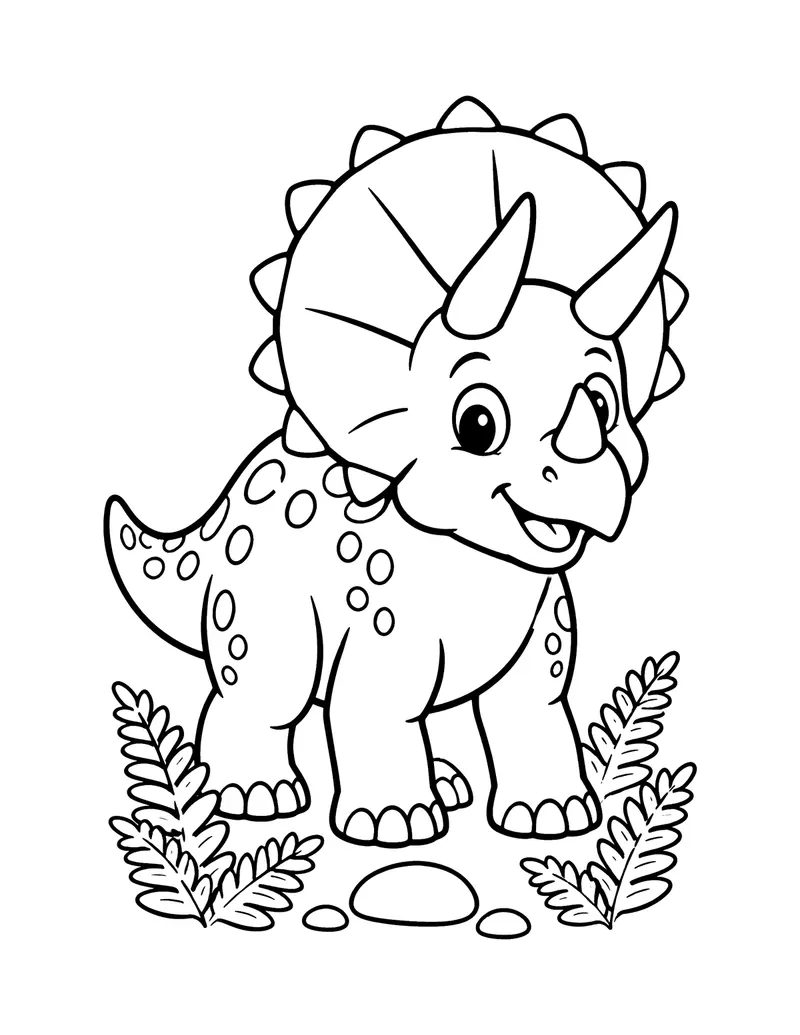
Triceratops
A triceratops stands proudly with a big frill, three horns, a textured body, and ferns around its feet, with rocks…
Download PDF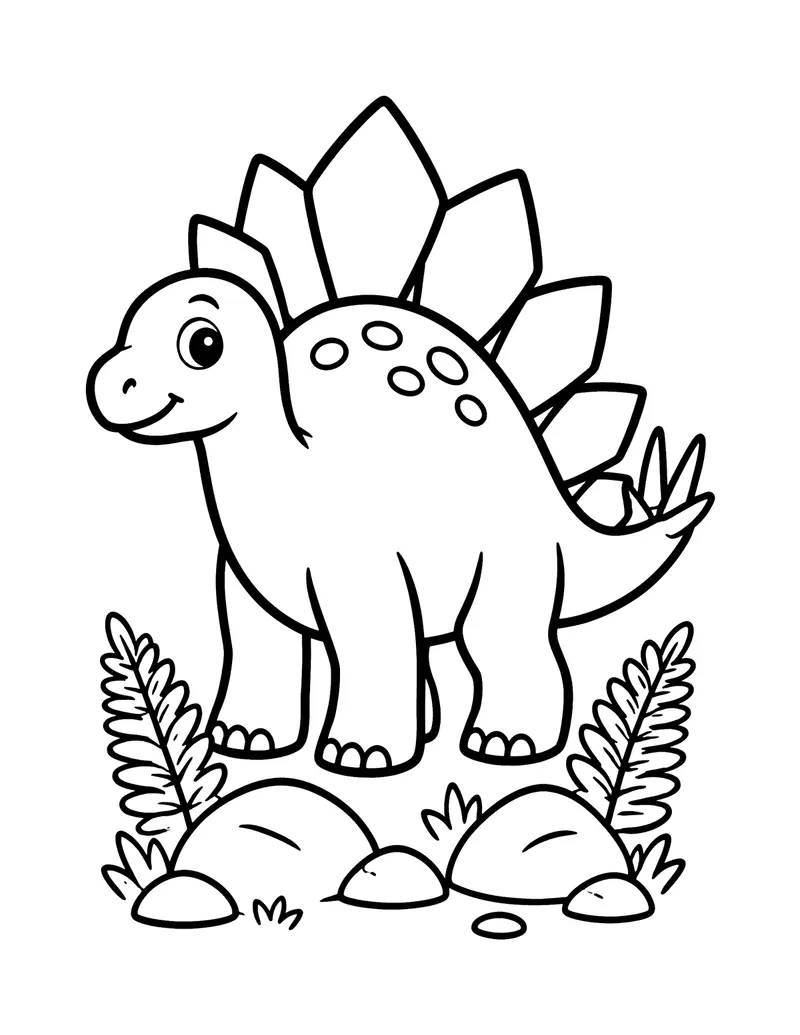 EasyNew!
Stegosaurus
A stegosaurus stands upright with large pointed back plates and a spiked tail, with ferns and rocks below and a…
Download PDF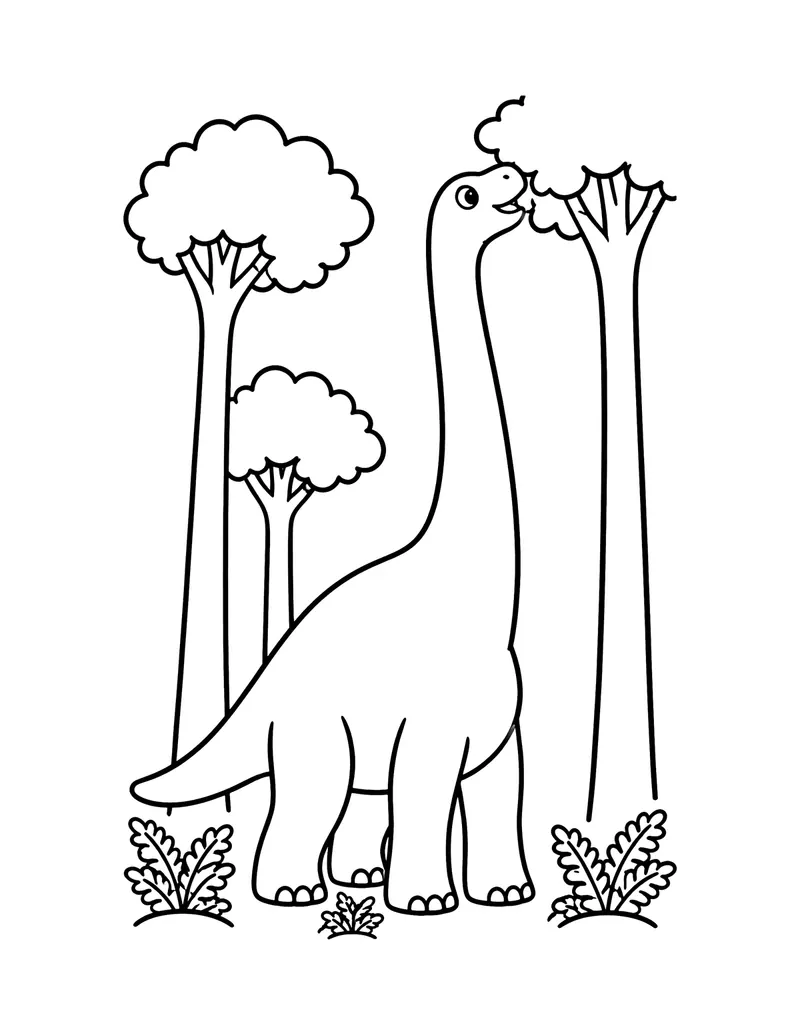 EasyNew!
Brachiosaurus
A huge brachiosaurus has a very long neck stretching up to the tops of tall trees, with small ferns at its feet.
Download PDF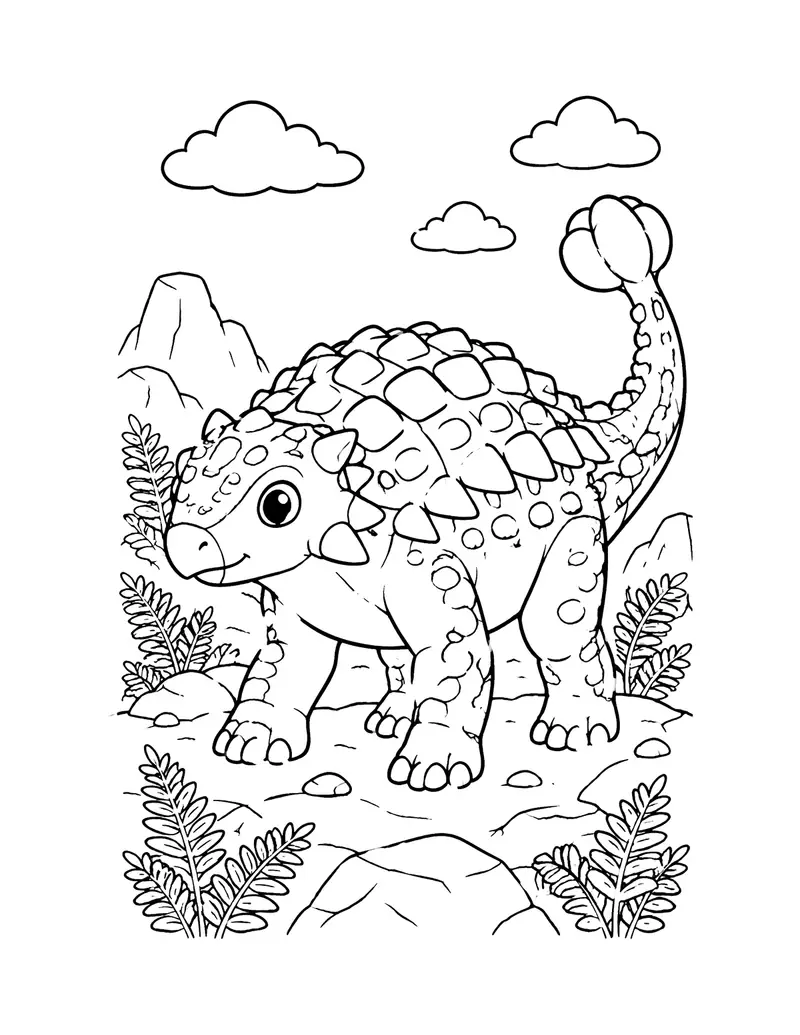 MediumNew!
Ankylosaurus
An ankylosaurus walks across rocky ground with armored bumpy plates and a clubbed tail, with ferns, mountains, and…
Download PDF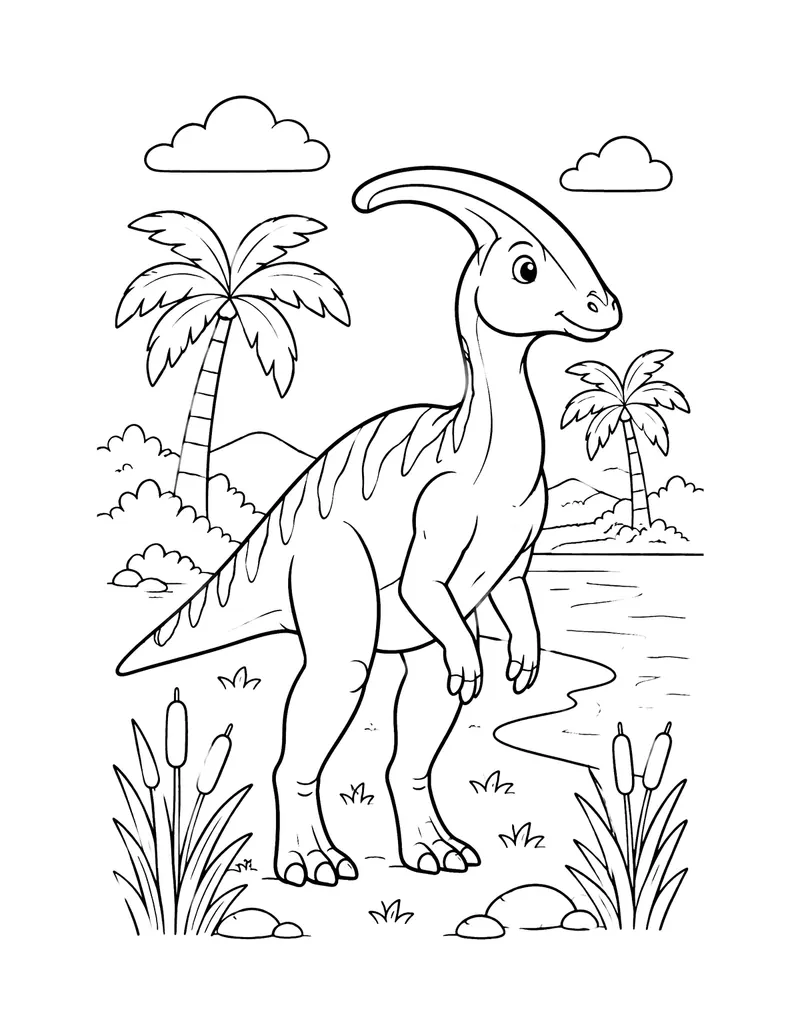 MediumNew!
Parasaurolophus
A parasaurolophus with a long curved head crest stands near a river, with reeds, palm trees, and hills behind it and…
Download PDF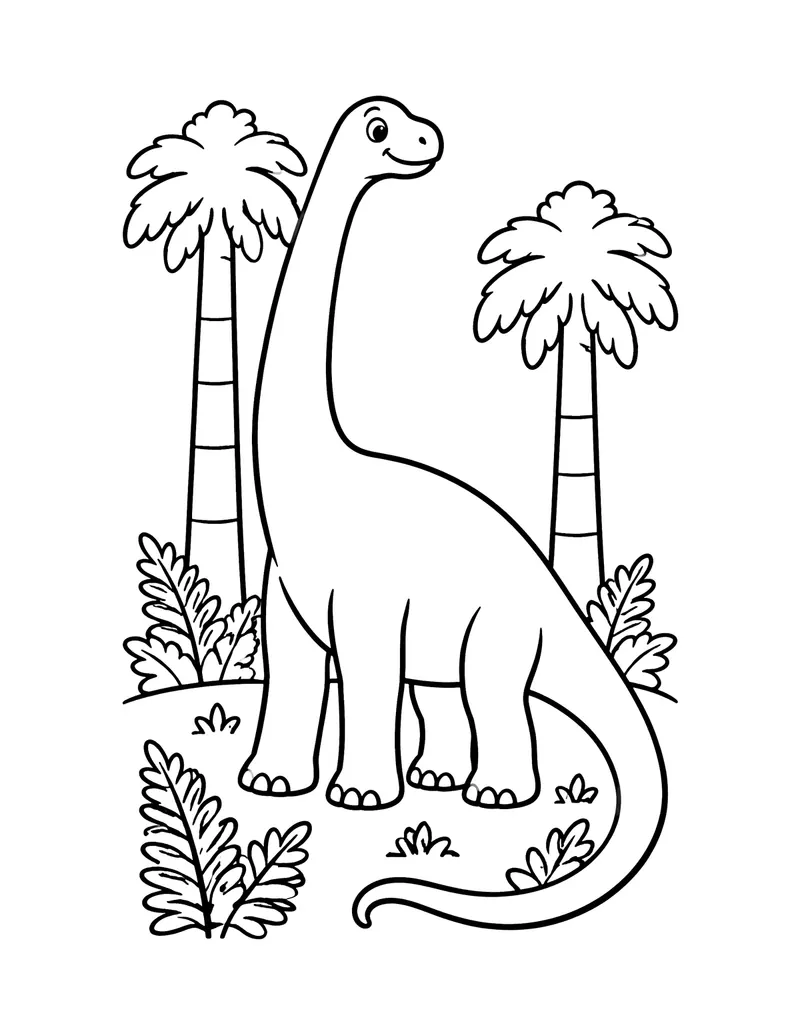 EasyNew!
Diplodocus
A diplodocus stands with a long neck rising upward between two palm trees and a whiplike tail curling at the bottom,…
Download PDF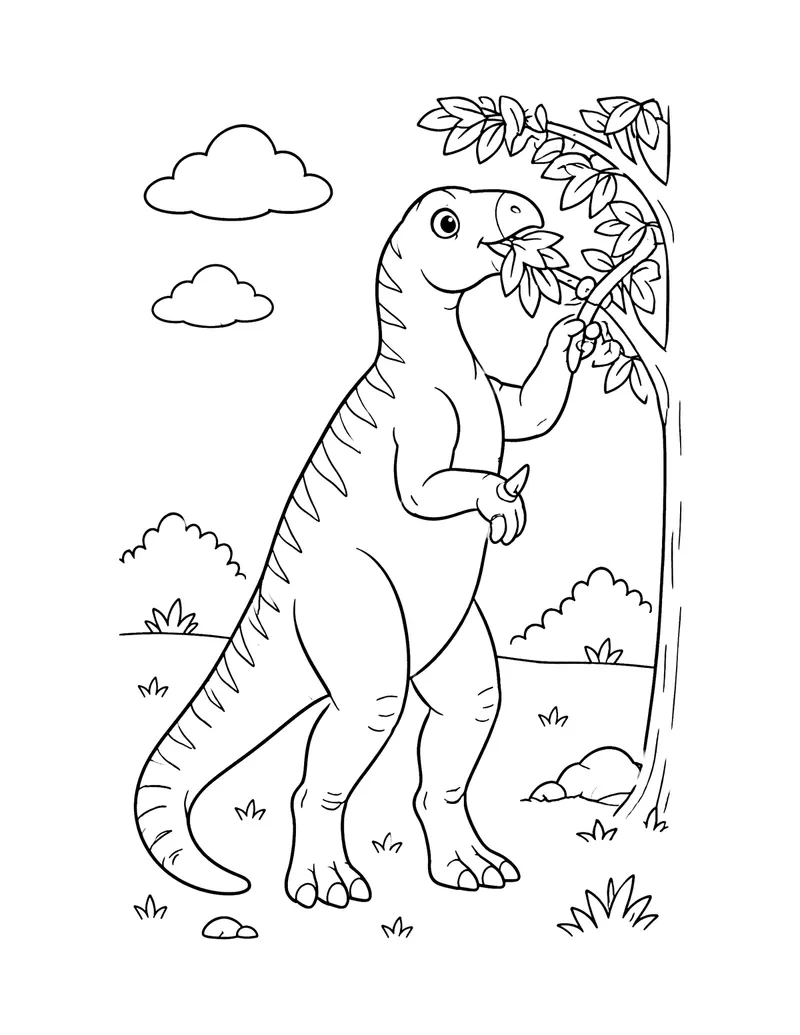 MediumNew!
Iguanodon
An iguanodon stands upright with thumb spikes and a heavy tail, eating leaves from a low tree, with bushes and small…
Download PDF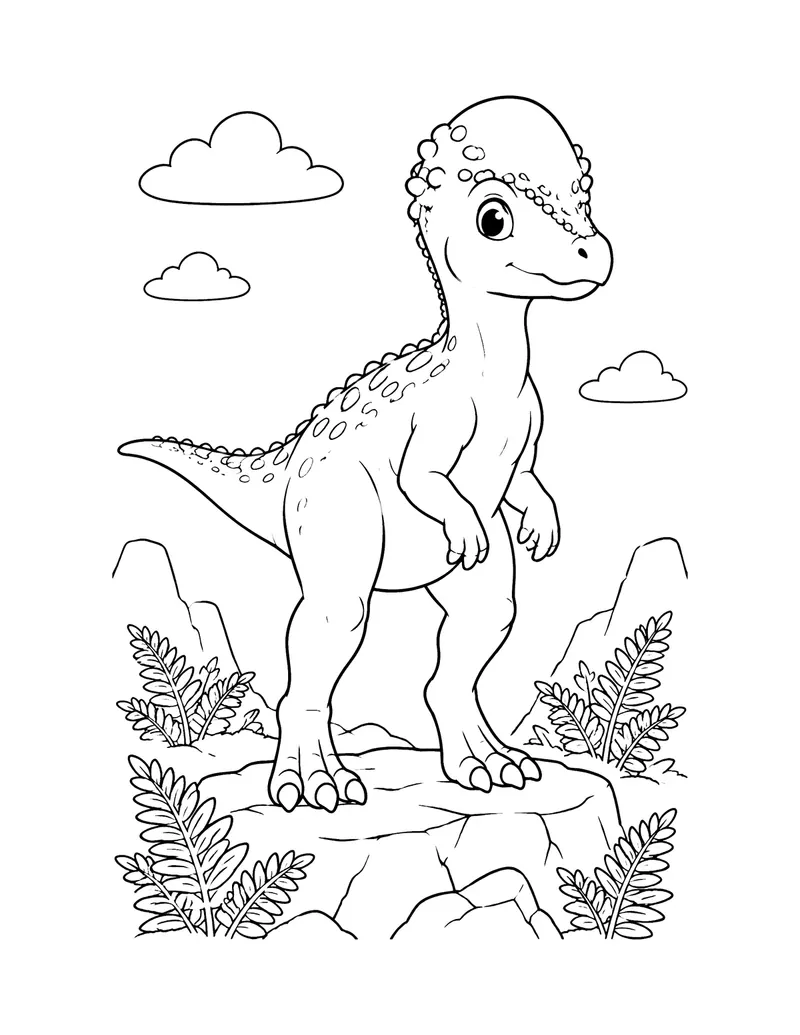 MediumNew!
Pachycephalosaurus
A pachycephalosaurus has a thick domed head with small bumps and stands on a rocky ledge with ferns and rocks behind it.
Download PDFMeat Eaters and Raptors
These hunters have sharp teeth and claws: a feathered velociraptor, an allosaurus, a spinosaurus with a tall sail, a horned carnotaurus, a roaring Tyrannosaurus rex, and a baby T-Rex by an egg. For many more pages of the most famous predator, visit our T-Rex coloring pages.
 EasyNew!
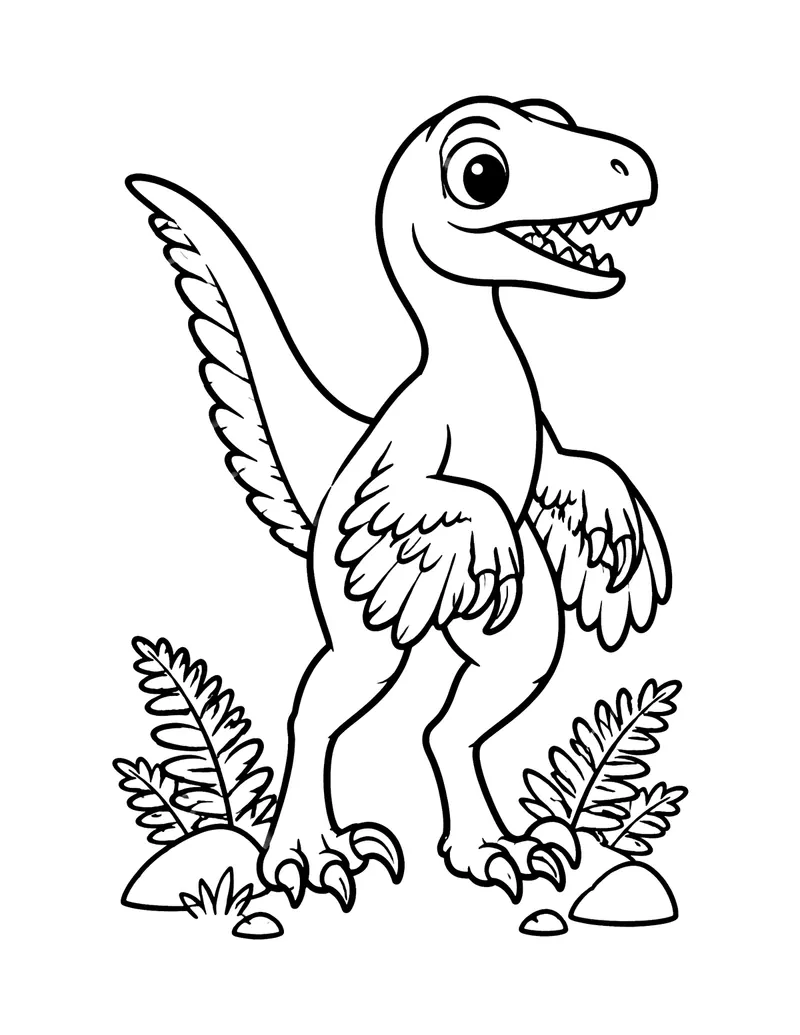
Velociraptor
A velociraptor stands upright with feathers on its arms and a long tail with feathers, with sharp claws and a toothy…
Download PDF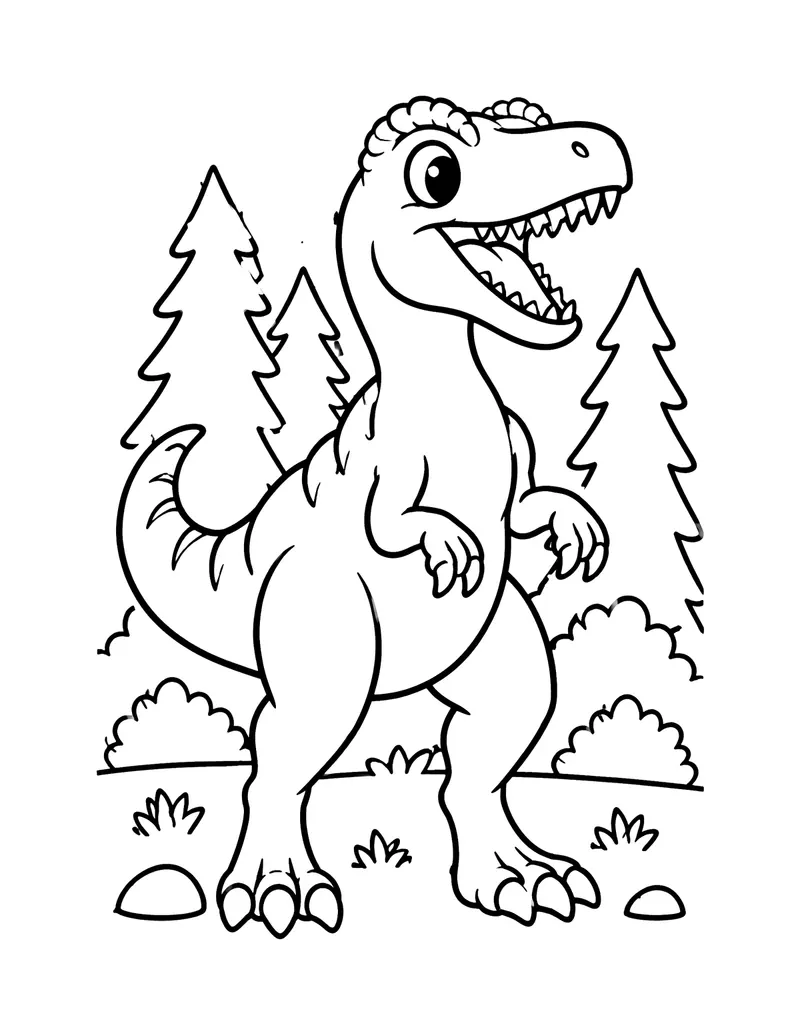 EasyNew!
Allosaurus
An allosaurus stands upright on powerful legs with an open mouth full of teeth and ridges above its eyes, with pine…
Download PDF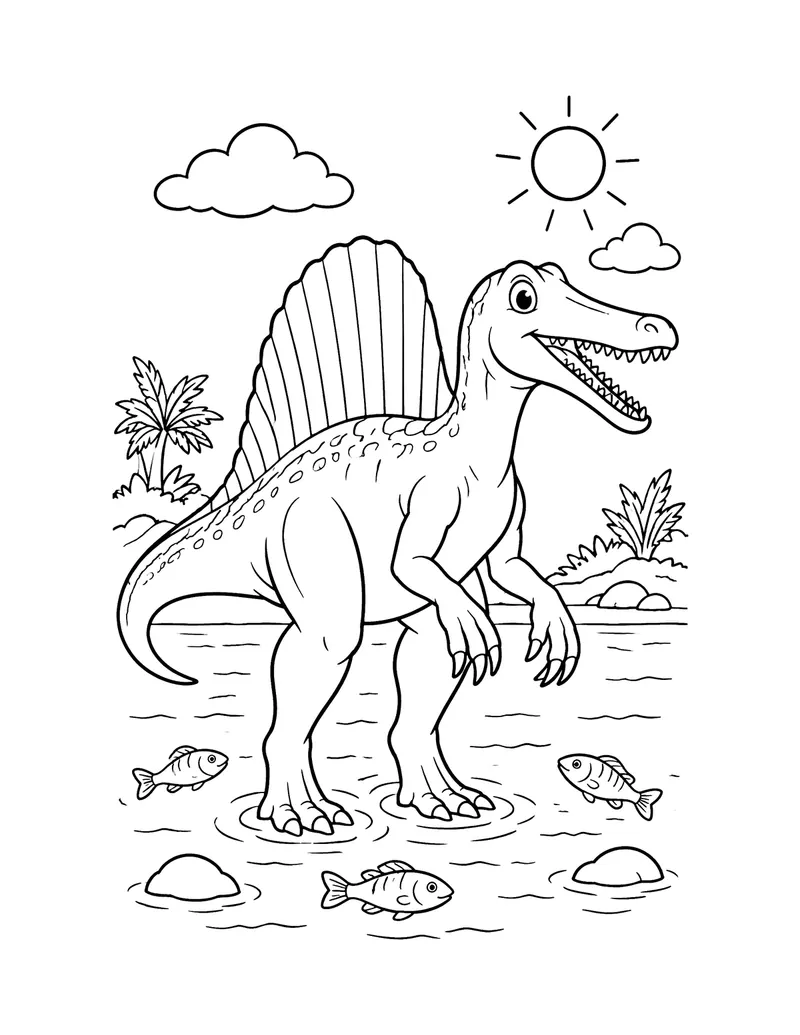 MediumNew!
Spinosaurus
A spinosaurus with a tall sail on its back stands in shallow water with fish swimming around its feet, with palm…
Download PDF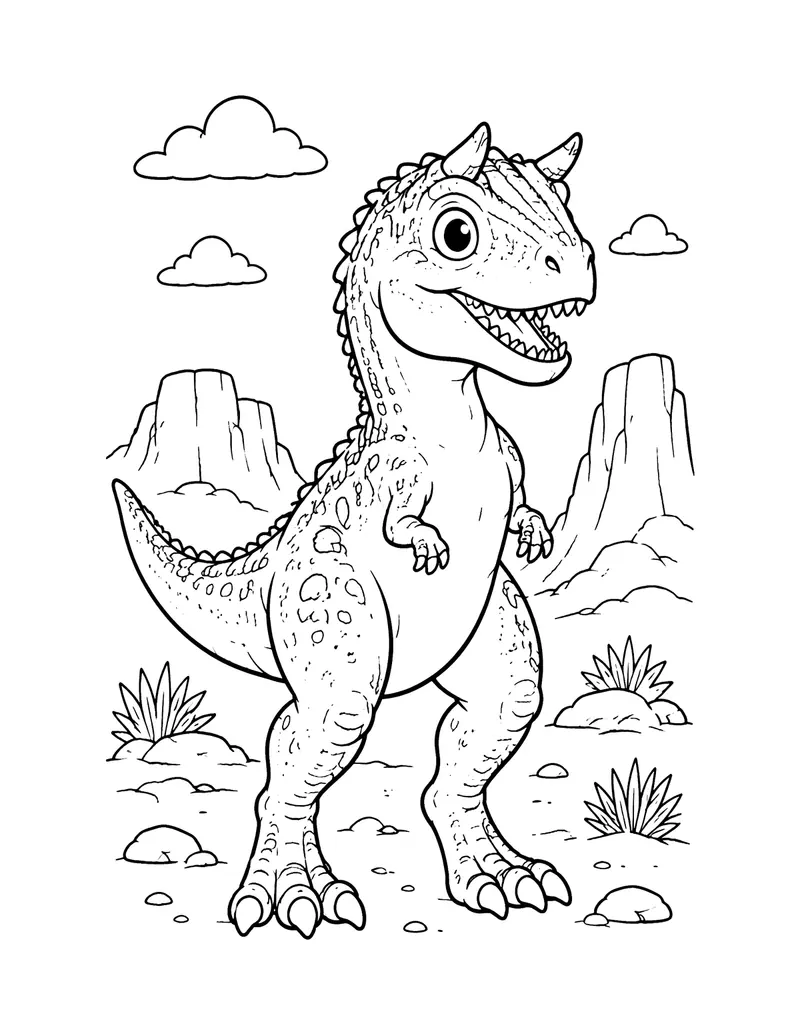 MediumNew!
Carnotaurus
A carnotaurus has two short horns above its eyes and tiny arms, with textured skin, a toothy mouth, and rocky…
Download PDF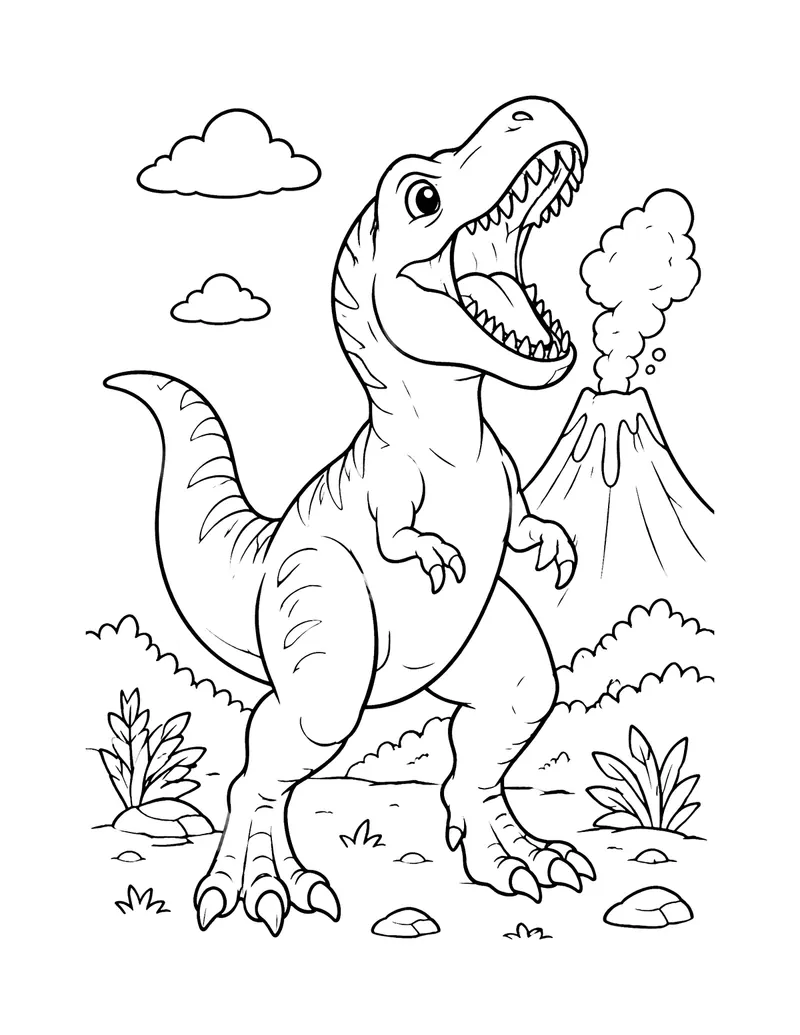 MediumNew!
T-Rex Roaring at a Volcano
A Tyrannosaurus rex roars upward with its mouth wide open, balanced by a big tail, with a smoking volcano behind it,…
Download PDF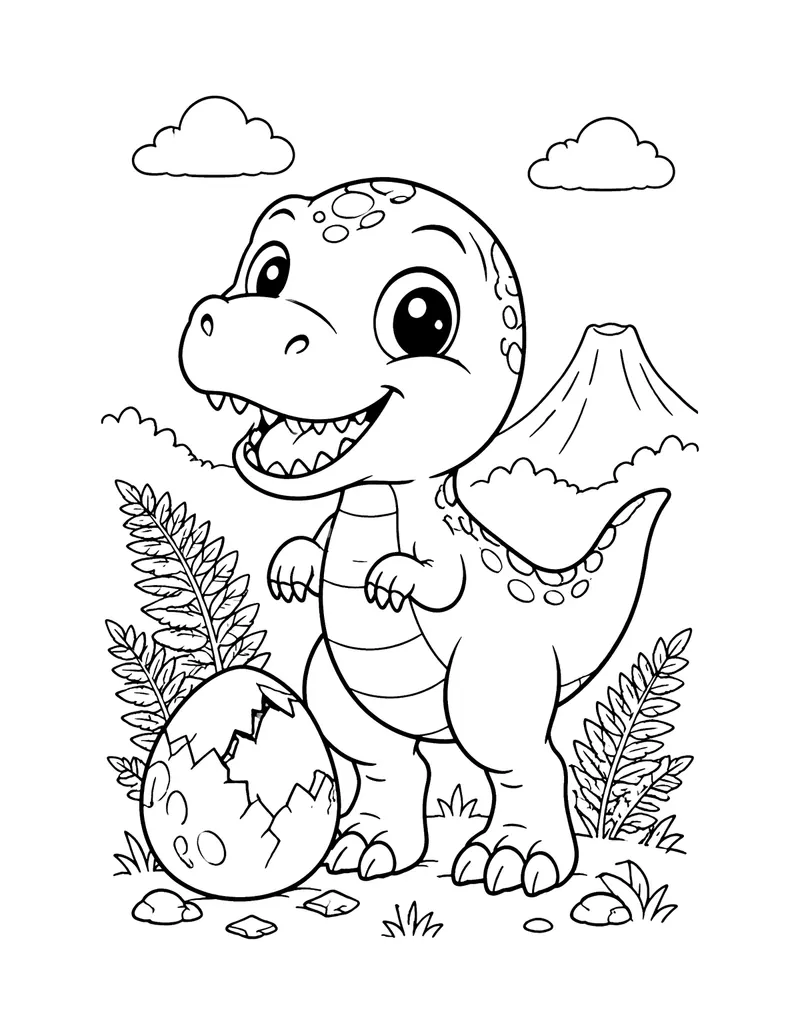 MediumNew!
Baby T-Rex by an Egg
A baby Tyrannosaurus rex has a big head and tiny arms and stands next to a cracked egg and ferns, with a small…
Download PDFFlying and Swimming Reptiles
Not every prehistoric animal was a dinosaur. Color a pteranodon in flight, a long-necked plesiosaur, a leaping ichthyosaur, a giant quetzalcoatlus on a cliff, and a diving mosasaurus. The ocean scenes have bubbles and fish, and the sky scenes have clouds, so they suit school-age kids.
 EasyNew!
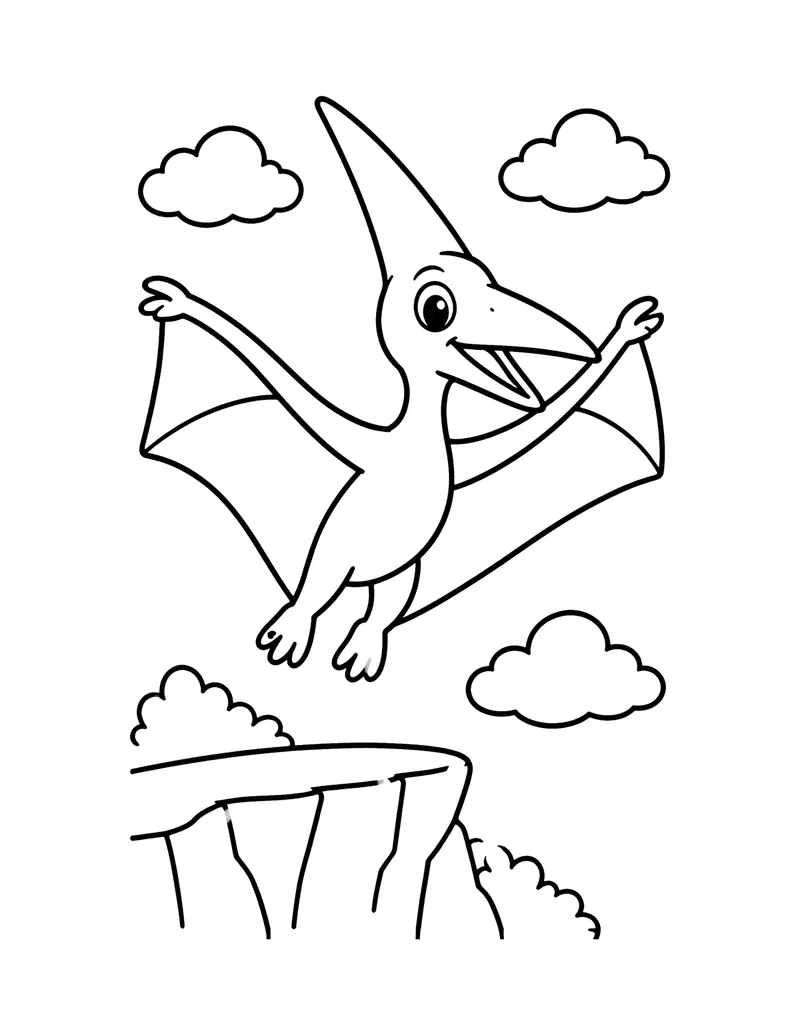
Pteranodon
A pteranodon flies upward with wings spread and a long pointed crest, with clouds in the sky and a cliff below.
Download PDF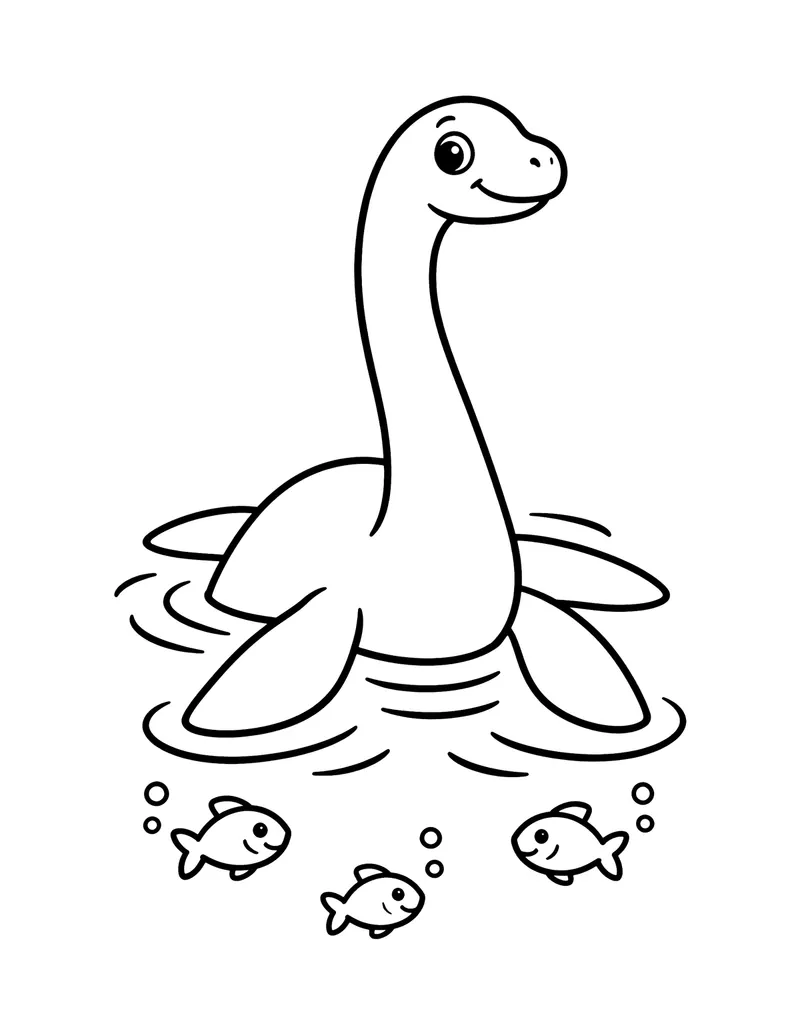 EasyNew!
Plesiosaur
A plesiosaur lifts its long neck out of the water, with flippers and ripples around it and small fish swimming below.
Download PDF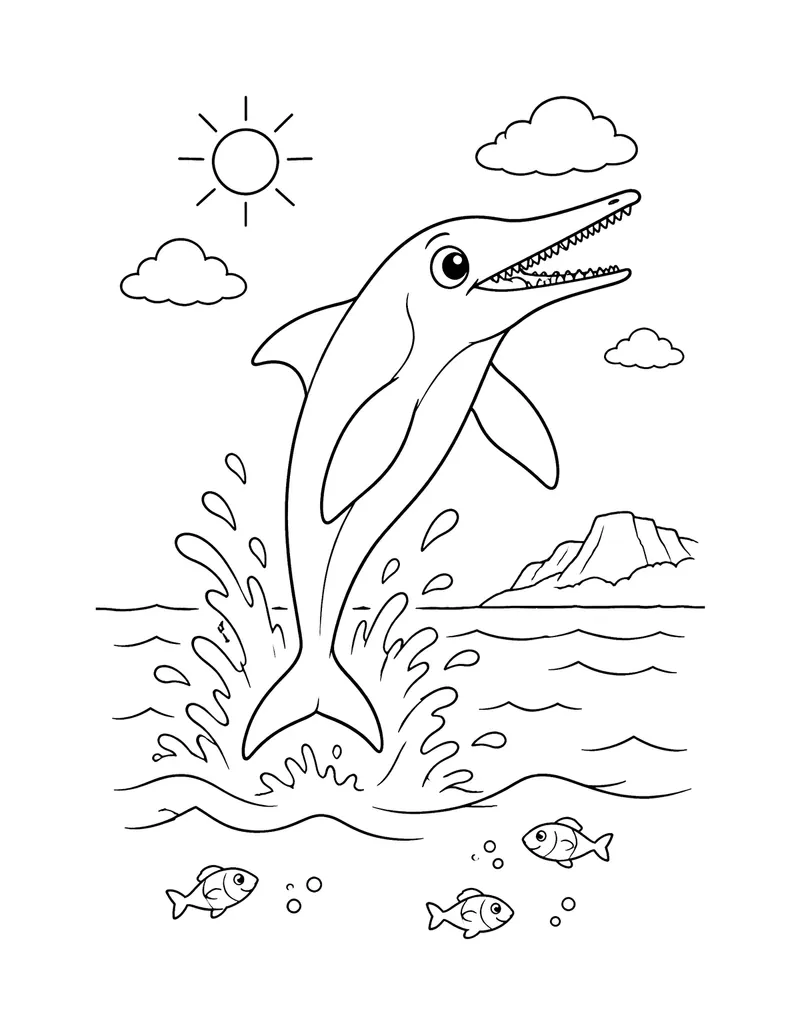 MediumNew!
Ichthyosaur
An ichthyosaur leaps out of the ocean like a dolphin, with water splashes, a few waves, a small island, and fish…
Download PDF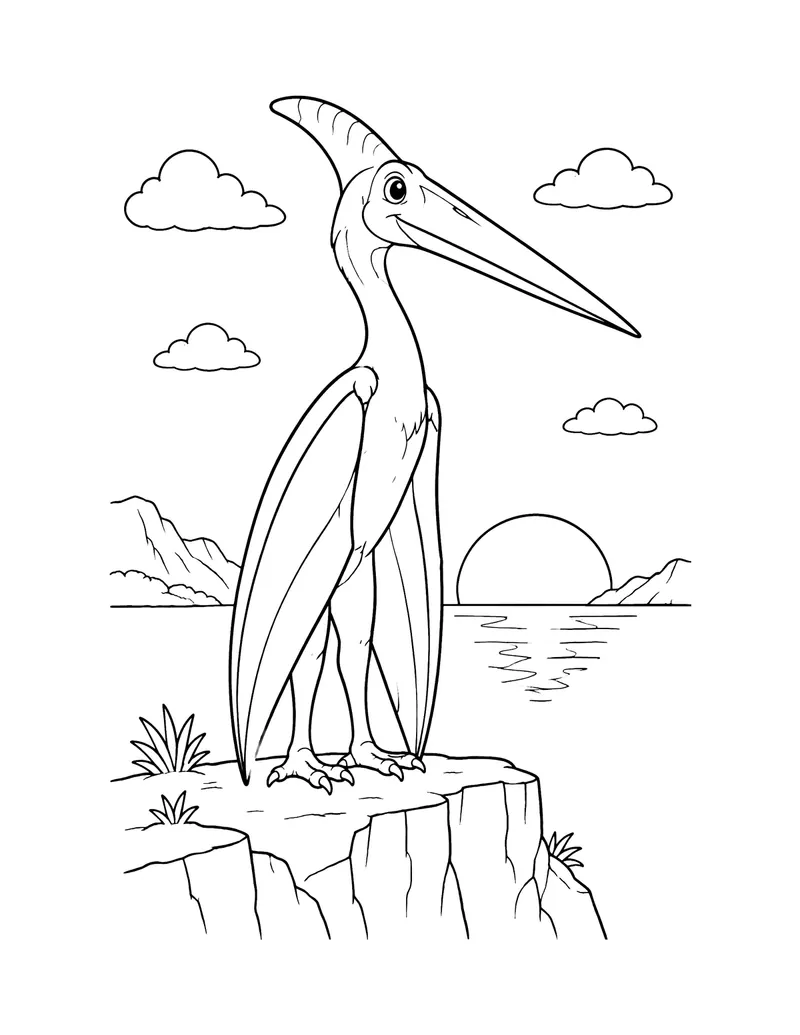 MediumNew!
Quetzalcoatlus
A giant quetzalcoatlus stands on a cliff with huge wings folded and a very long beak, with a setting sun over the…
Download PDF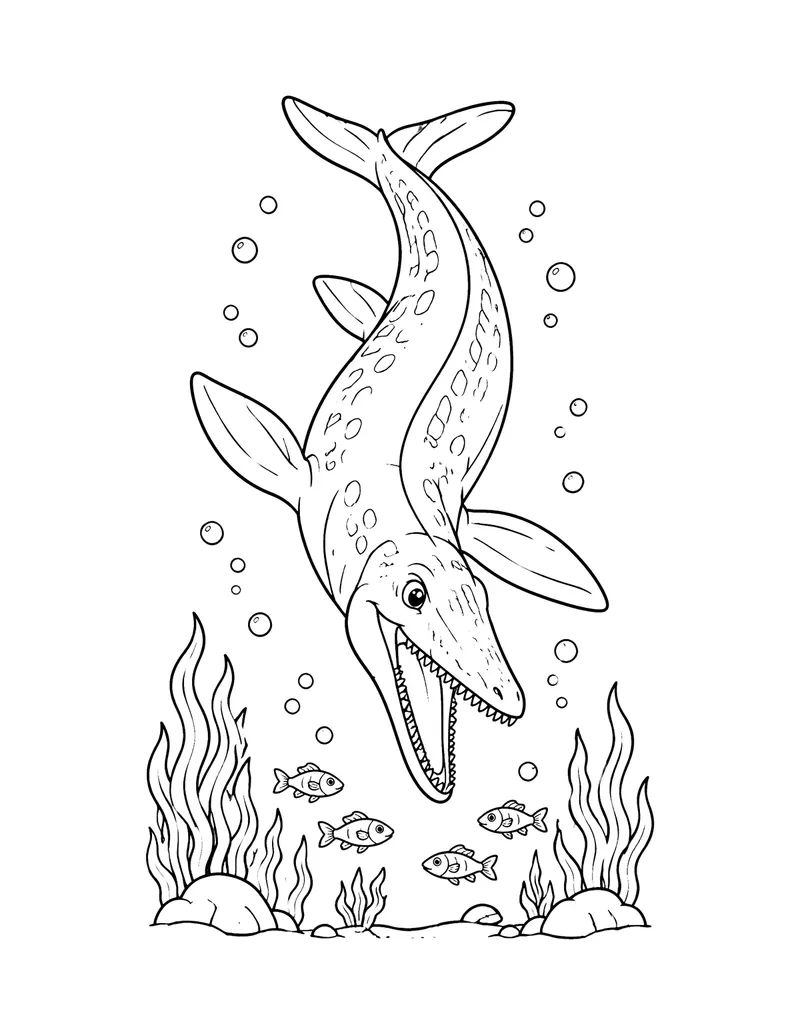 MediumNew!
Mosasaurus
A mosasaurus dives down through the ocean with its jaws open, with bubbles, seaweed, and small fish below.
Download PDFPrehistoric Landscapes
Step into the prehistoric world with a herd by a volcano, a jungle valley with a river, a swamp with reeds, a mother guarding her nest, dinosaurs at a waterfall, a glowing meteor in the sky, and a sunset valley. These scenes have layered backgrounds with ferns and palm trees to color.
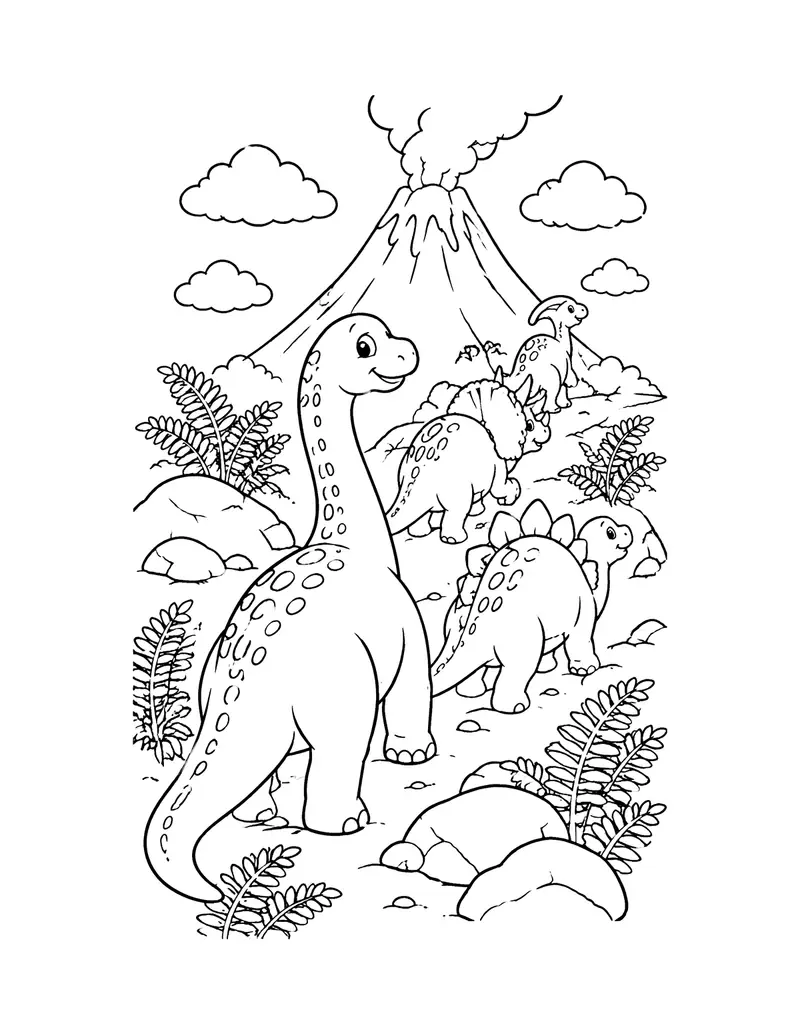 MediumNew!
Dinosaurs by a Volcano
A herd of dinosaurs walks up the page toward a smoking volcano, with ferns, boulders, and clouds around them.
Download PDF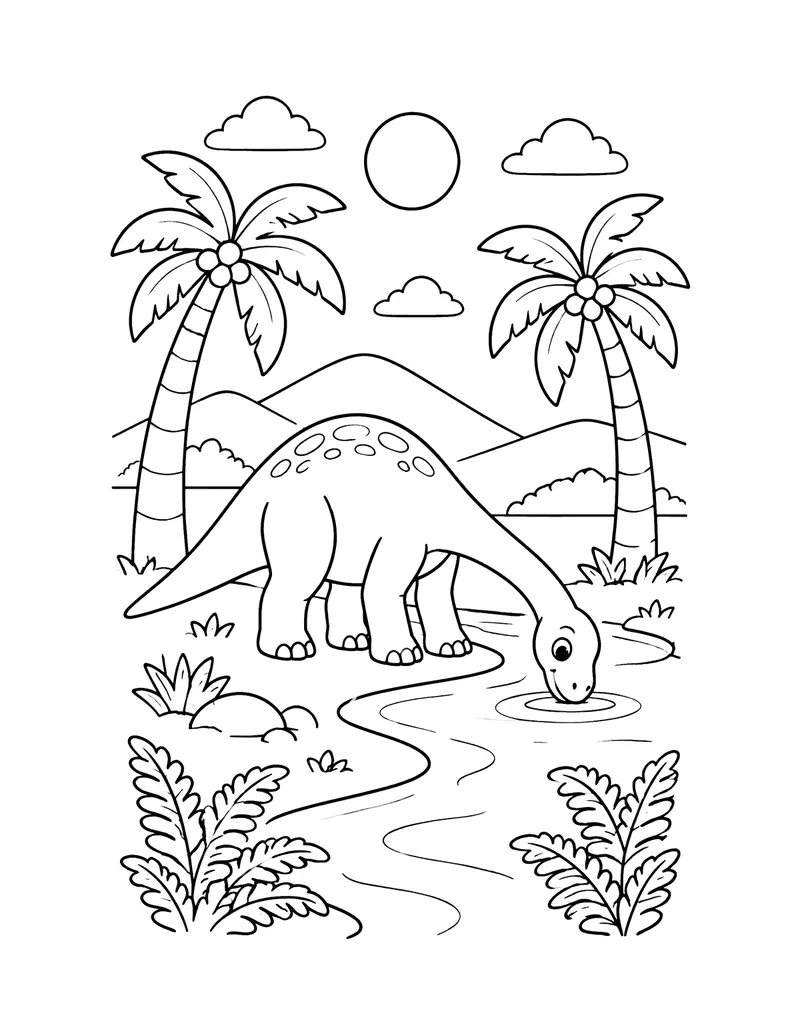 MediumNew!
Jungle Valley
A calm valley has a winding river, two tall palm trees, and big ferns, with a long-necked dinosaur bending down to…
Download PDF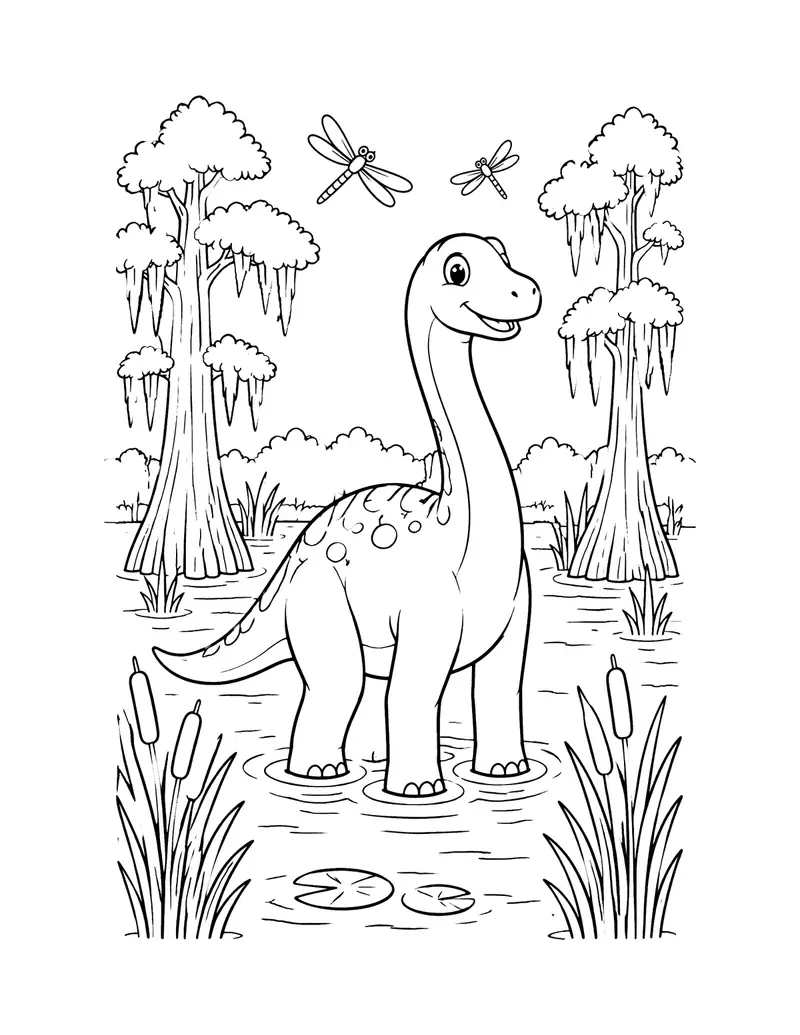 MediumNew!
Dinosaurs in a Swamp
A swamp with tall cypress trees and reeds has a long-necked dinosaur wading in the water, with dragonflies above and…
Download PDF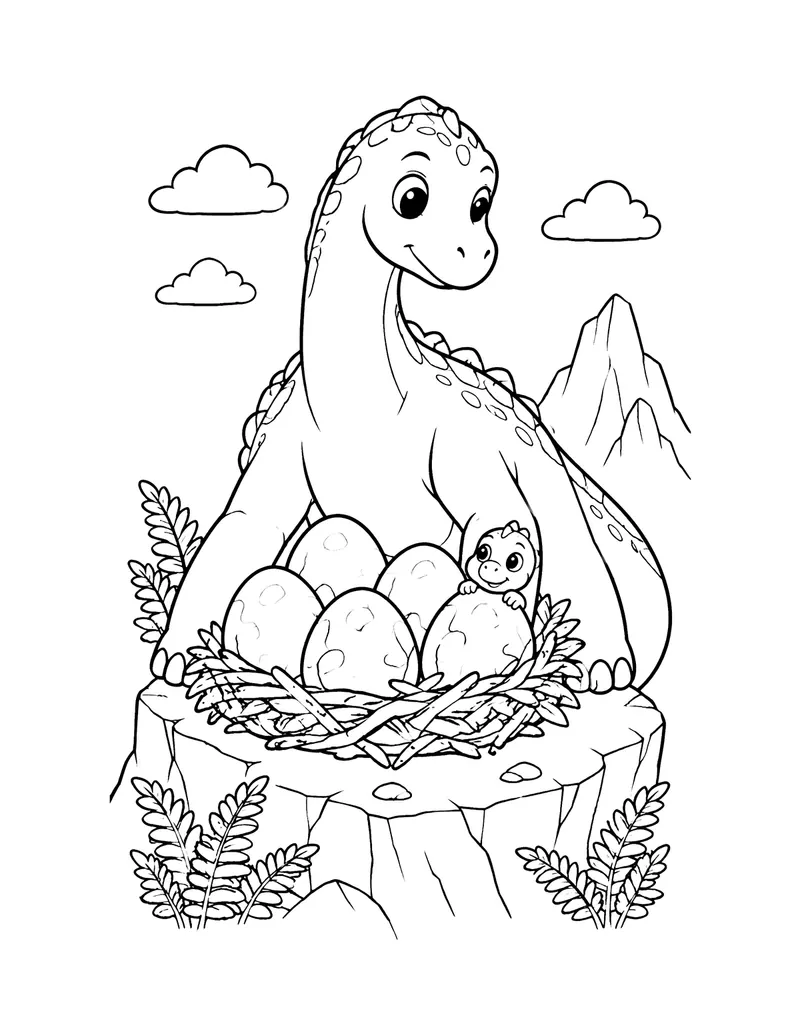 MediumNew!
Dinosaur Nest
A mother dinosaur guards a nest with five large spotted eggs on a rocky ledge, with ferns around and a small baby…
Download PDF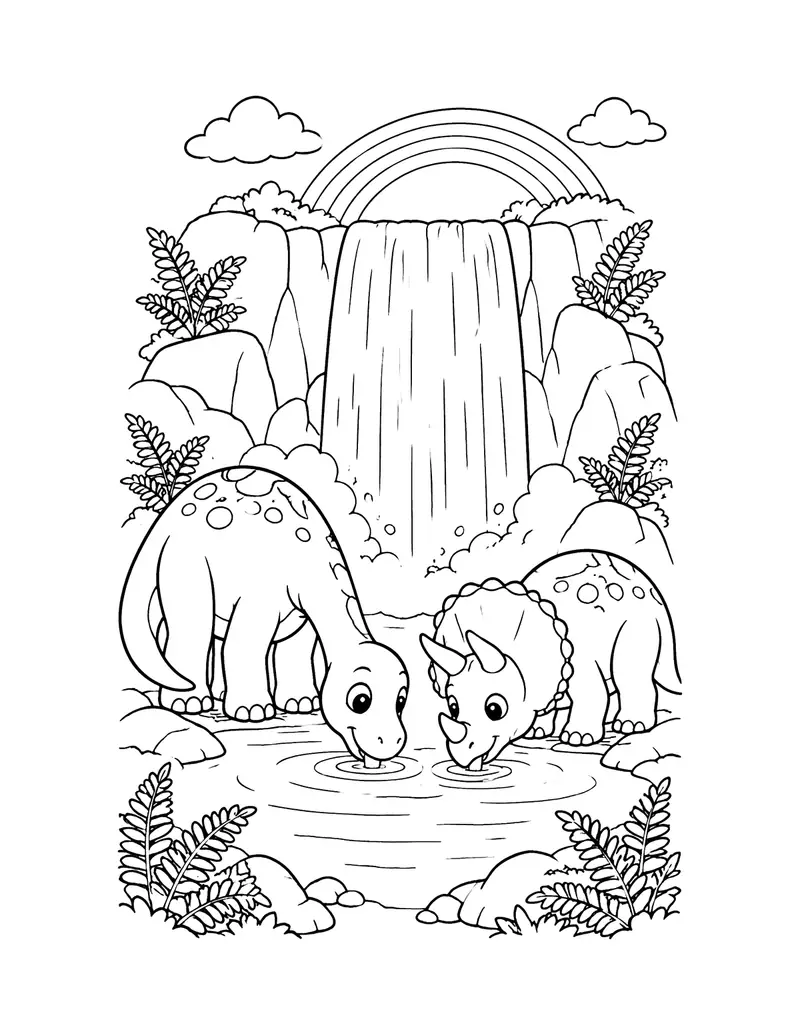 MediumNew!
Dinosaurs at a Waterfall
Two dinosaurs drink at a pool beneath a tall waterfall, with rocks, ferns, and a rainbow in the mist above.
Download PDF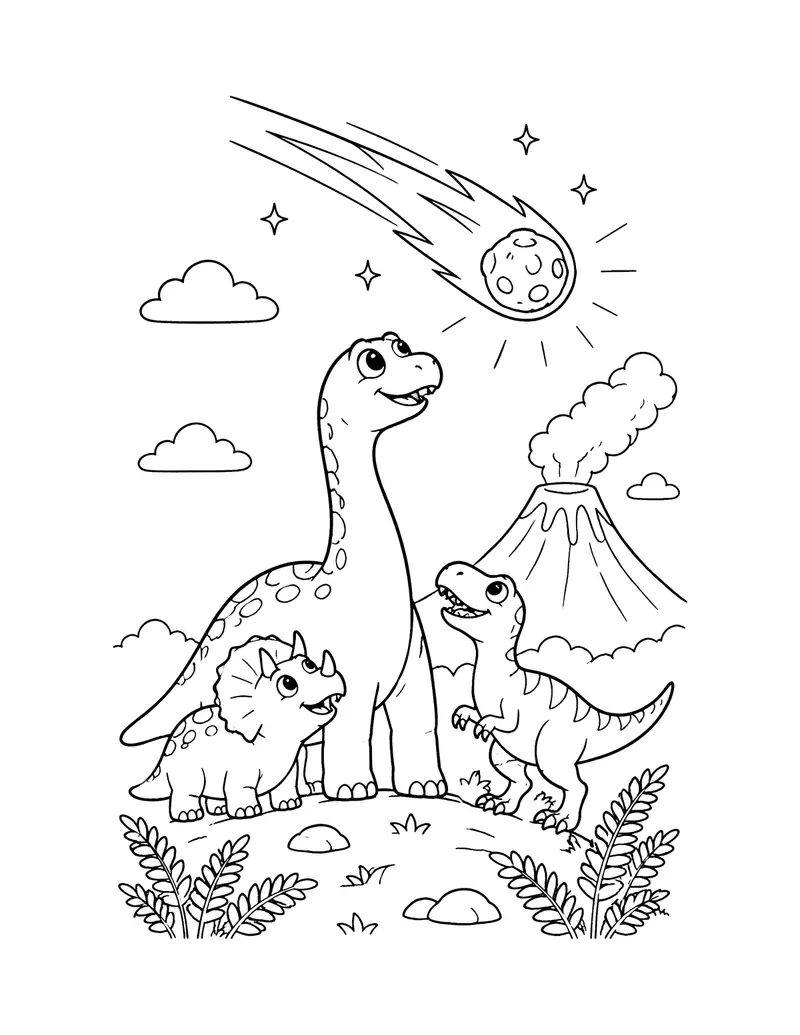 MediumNew!
Meteor in the Sky
A few dinosaurs stand on a hill and look up at a glowing meteor with a long tail in the sky, with a smoking volcano…
Download PDF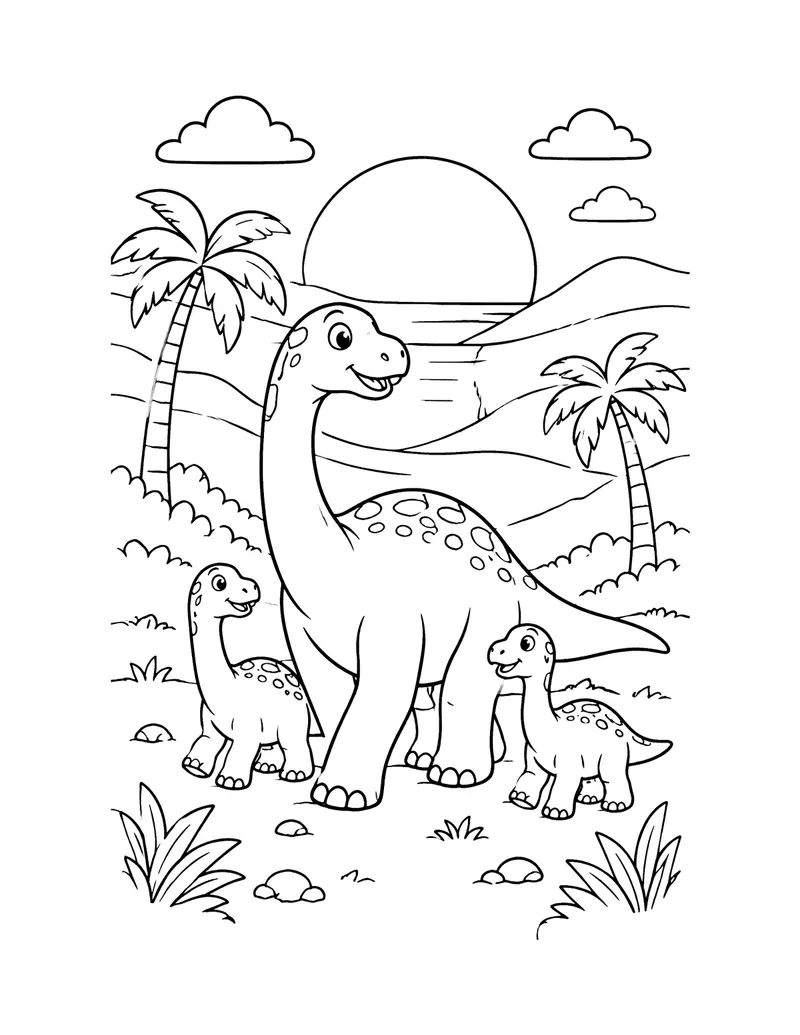
Kids and Dinosaurs
Kids and dinosaurs make a fun pair: a child riding a friendly long-necked dinosaur, a paleontologist digging for bones, two kids at a museum skeleton, feeding a baby dino a leaf, a child in a dino costume, marshmallows by a campfire, and an egg hunt. The feeding and costume pages are easiest for toddlers.
 EasyNew!
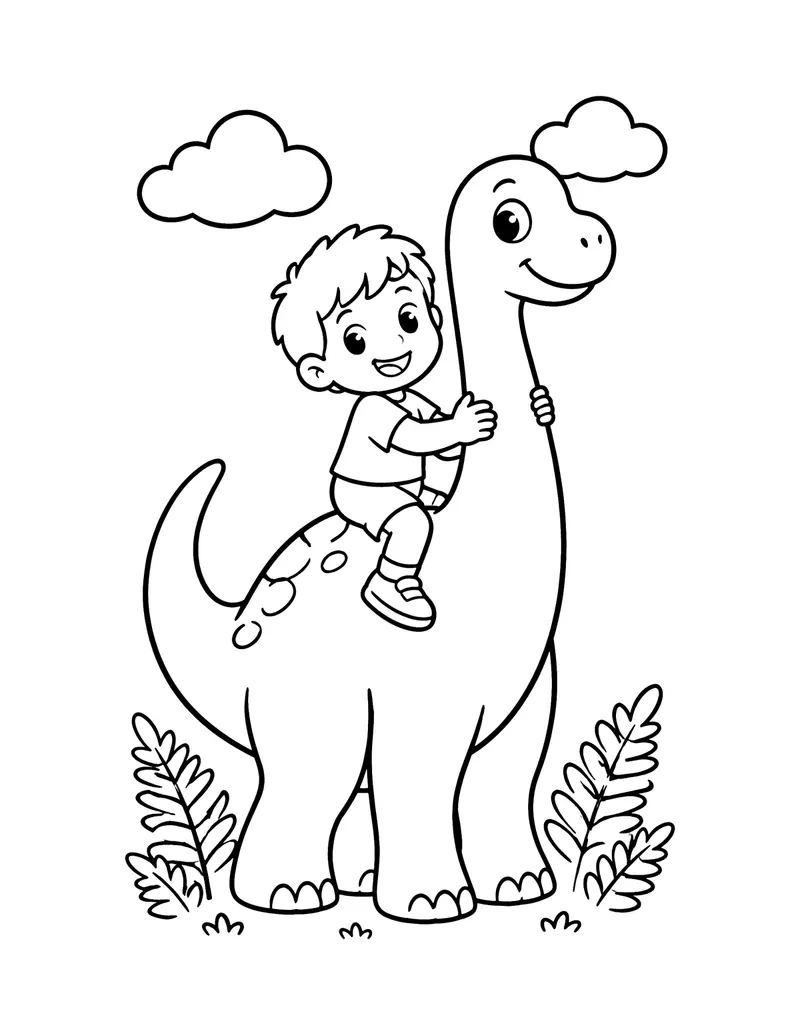
Child Riding a Friendly Dino
A smiling child rides on the back of a gentle long-necked dinosaur, holding on with both hands, with ferns and…
Download PDF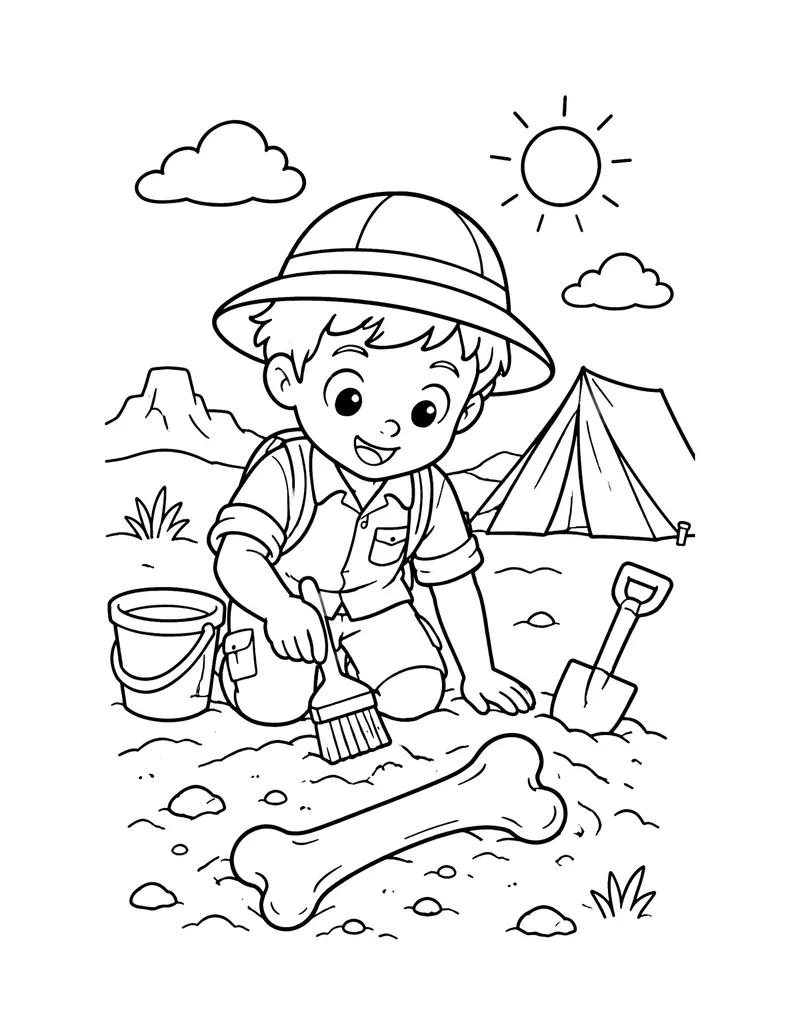 MediumNew!
Digging for Fossils
A child with a safari hat and a brush digs a big dinosaur bone out of the sand, with a bucket, a shovel, and a tent…
Download PDF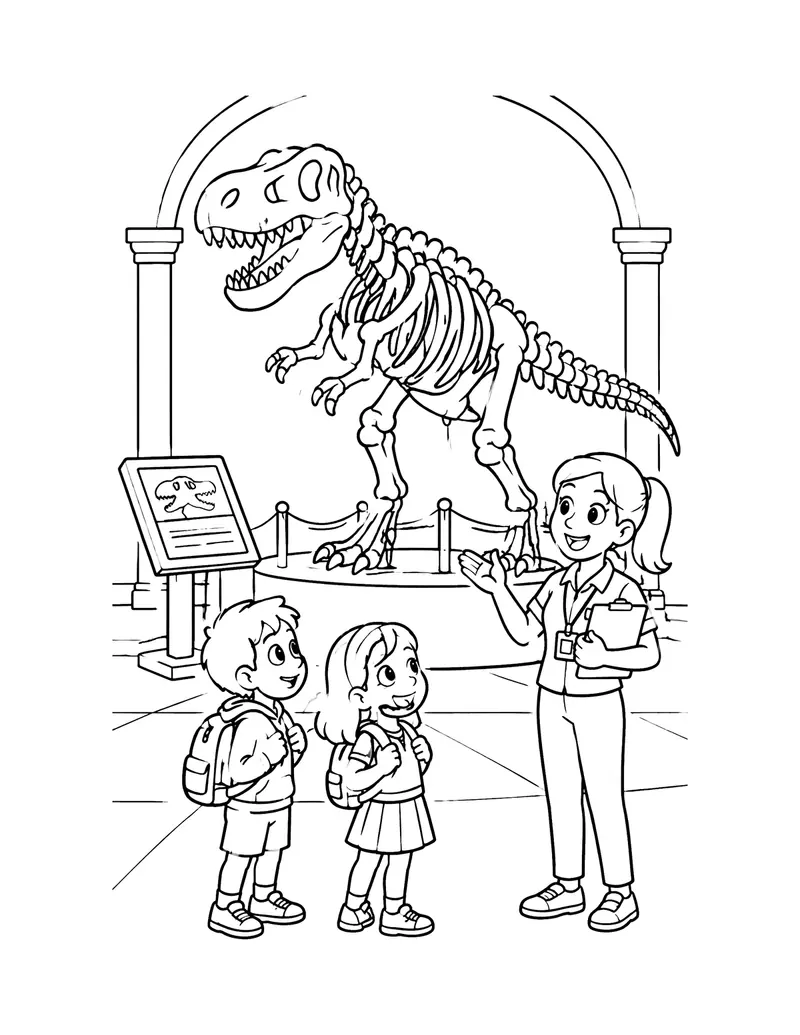 MediumNew!
Museum Skeleton Visit
Two kids stand in front of a huge dinosaur skeleton in a museum hall with a smiling guide, a sign post, and stone…
Download PDF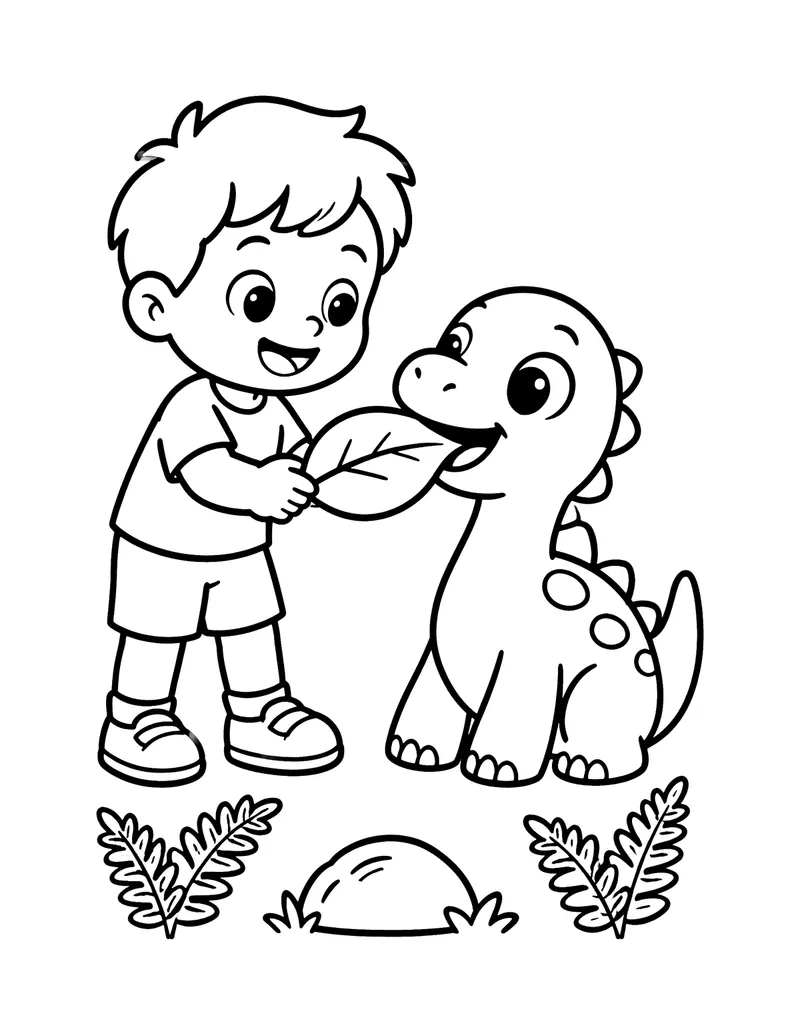 EasyNew!
Feeding a Baby Dino
A child feeds a baby dinosaur a big leaf, with both smiling, ferns, and a small rock on the ground.
Download PDF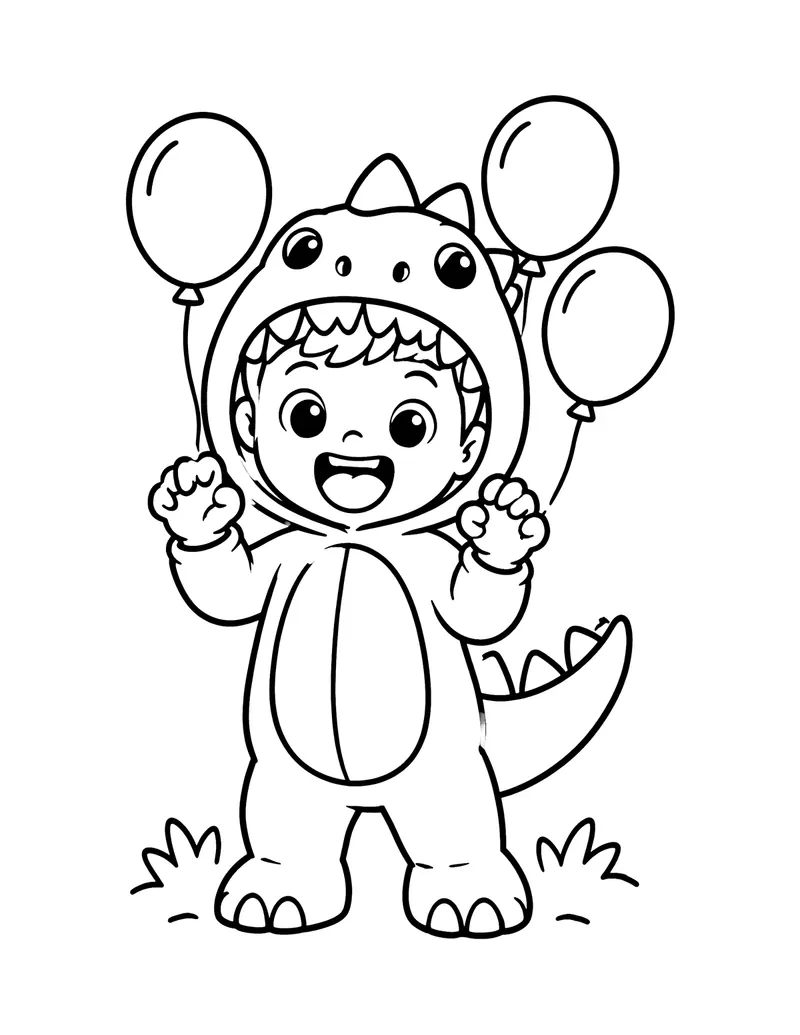 EasyNew!
Kid in a Dino Costume
A child wears a dinosaur costume with a hood, spikes, and a tail, roaring happily with balloons behind.
Download PDF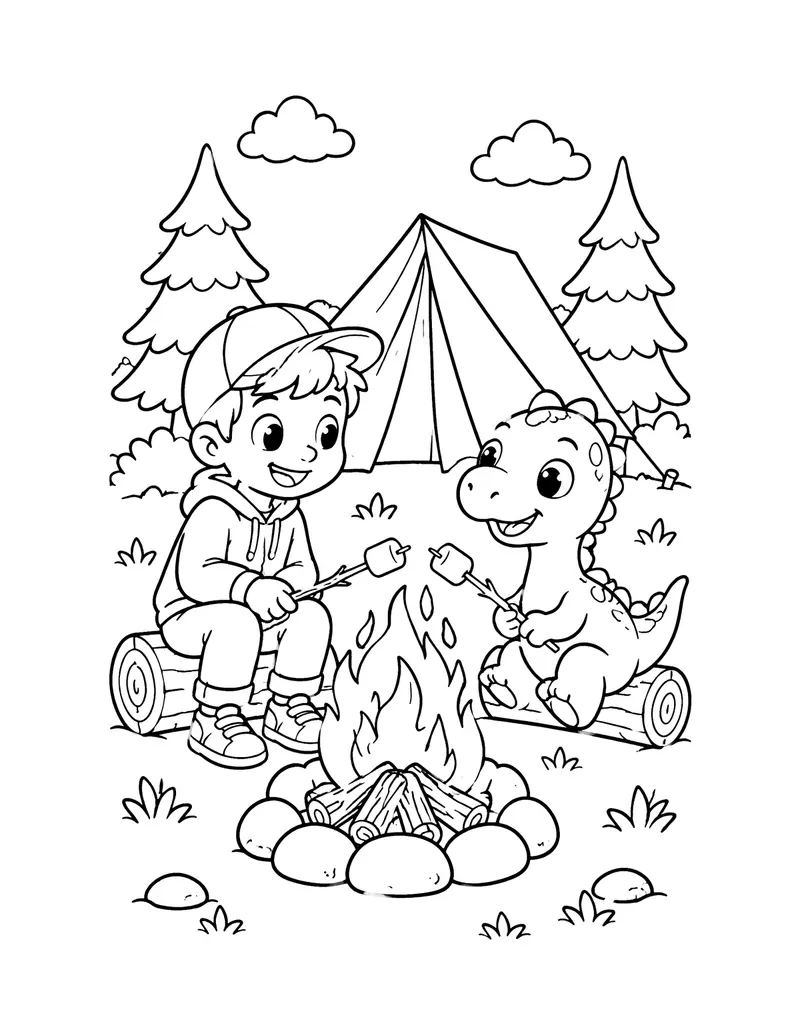 MediumNew!
Marshmallows with a Dino
A child and a baby dinosaur sit by a campfire roasting marshmallows, with a tent, pine trees, and stones around the…
Download PDF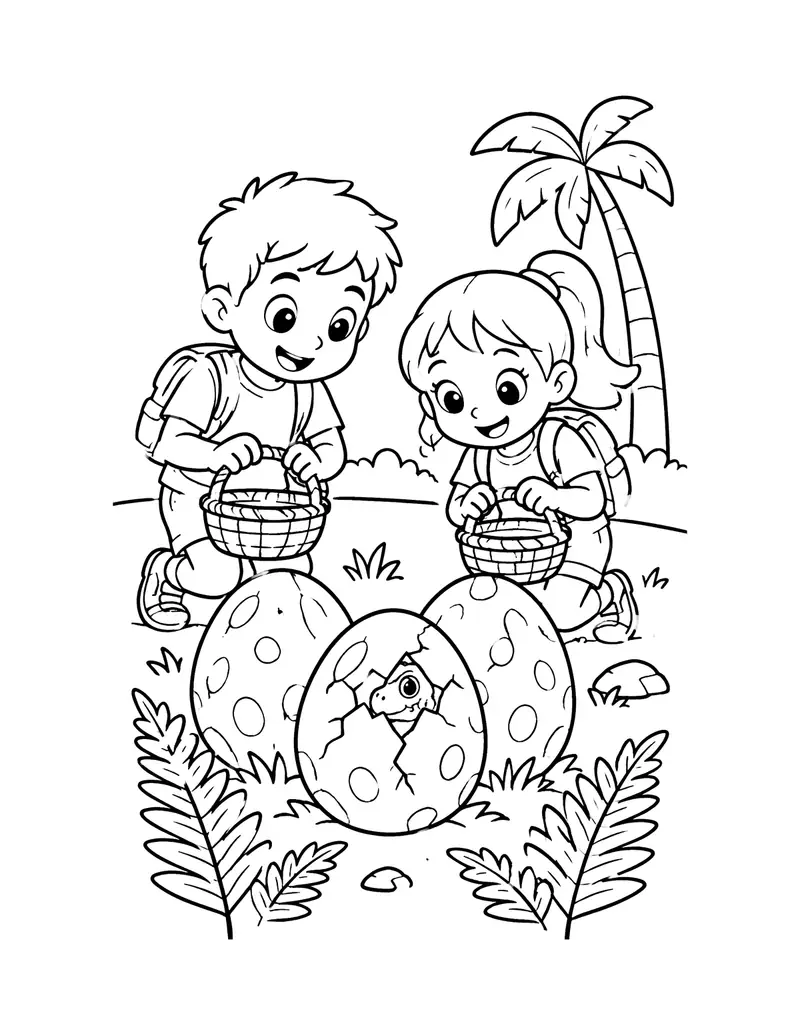
Fossils, Skeletons and Eggs
Dig into science with a museum skeleton, a trail of three-toed footprints, an ammonite fossil on a rock slab, and a cracked dinosaur egg. The footprints and egg are simple, while the skeleton and fossil pages have more detail for older kids who like to learn how fossils are found.
 MediumNew!
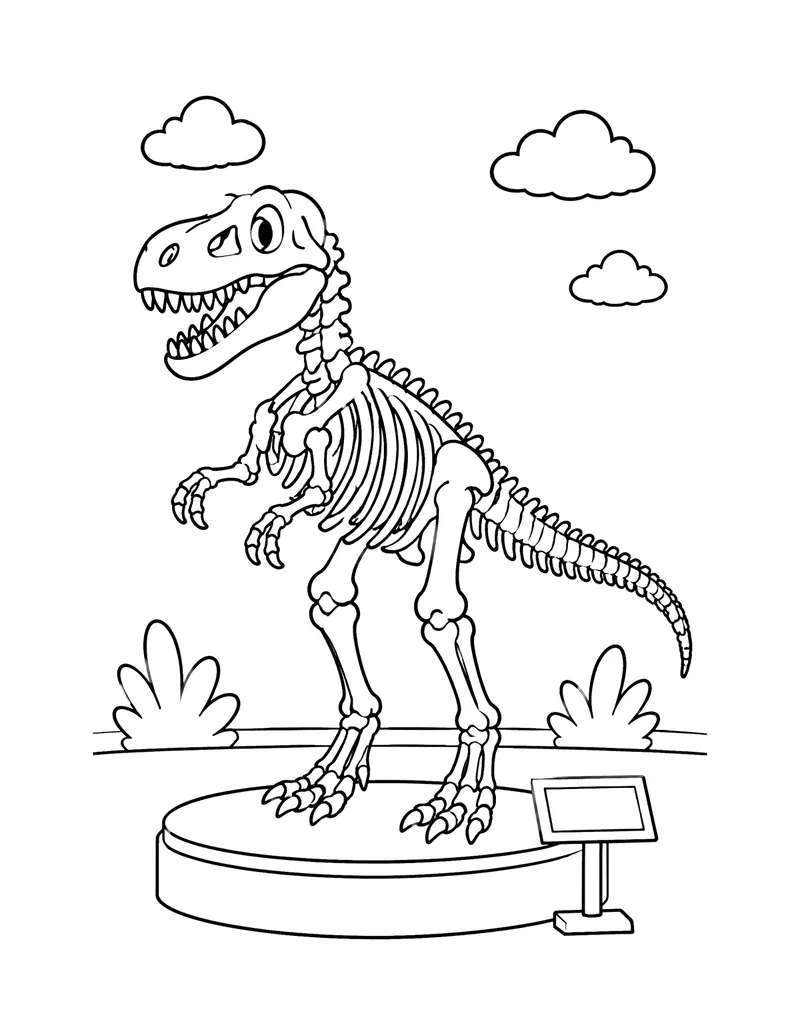
Dinosaur Skeleton
A complete dinosaur skeleton stands on a museum platform with ribs, a skull, and a long tail, with a small blank…
Download PDF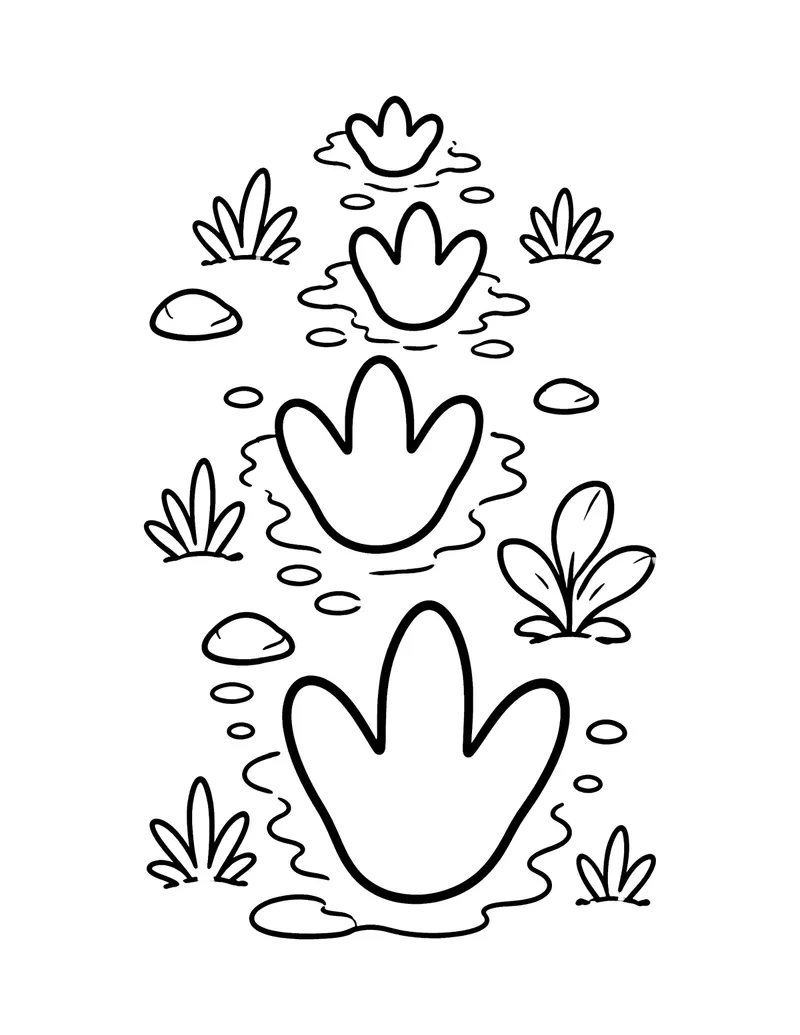 EasyNew!
Dinosaur Footprints
A trail of large three-toed dinosaur footprints goes up the page across muddy ground with small plants and puddles.
Download PDF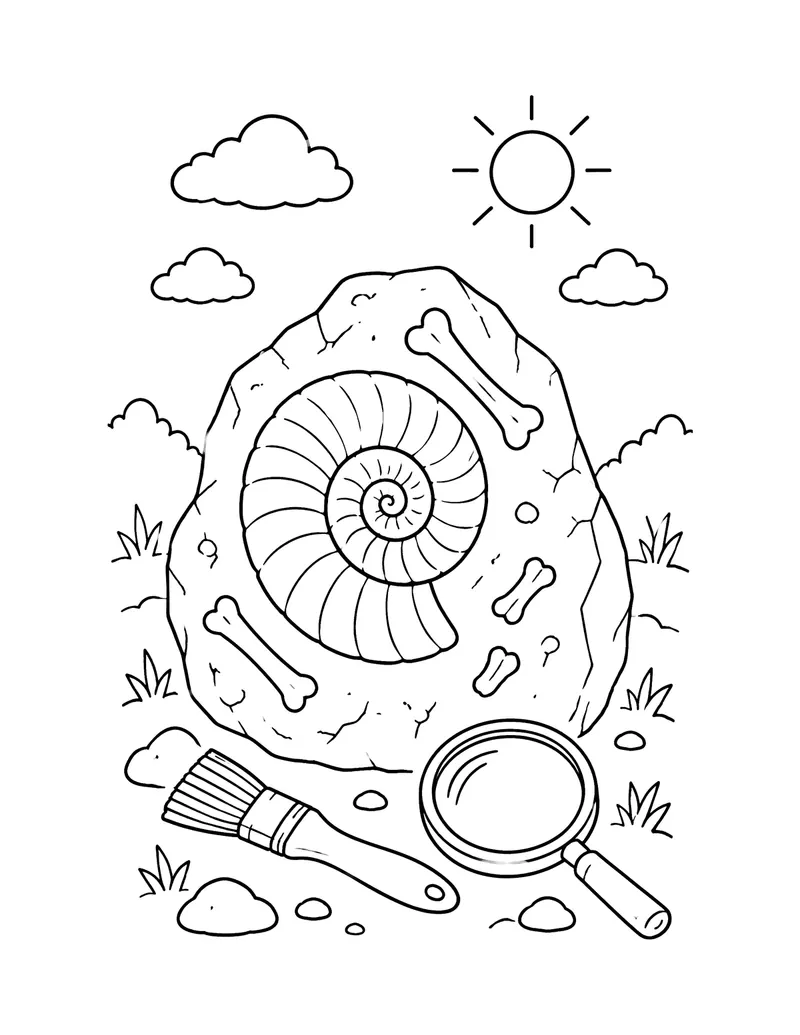 MediumNew!
Ammonite Fossil
A rock slab holds an ammonite shell fossil with small bones pressed into it, with a brush and a magnifying glass…
Download PDF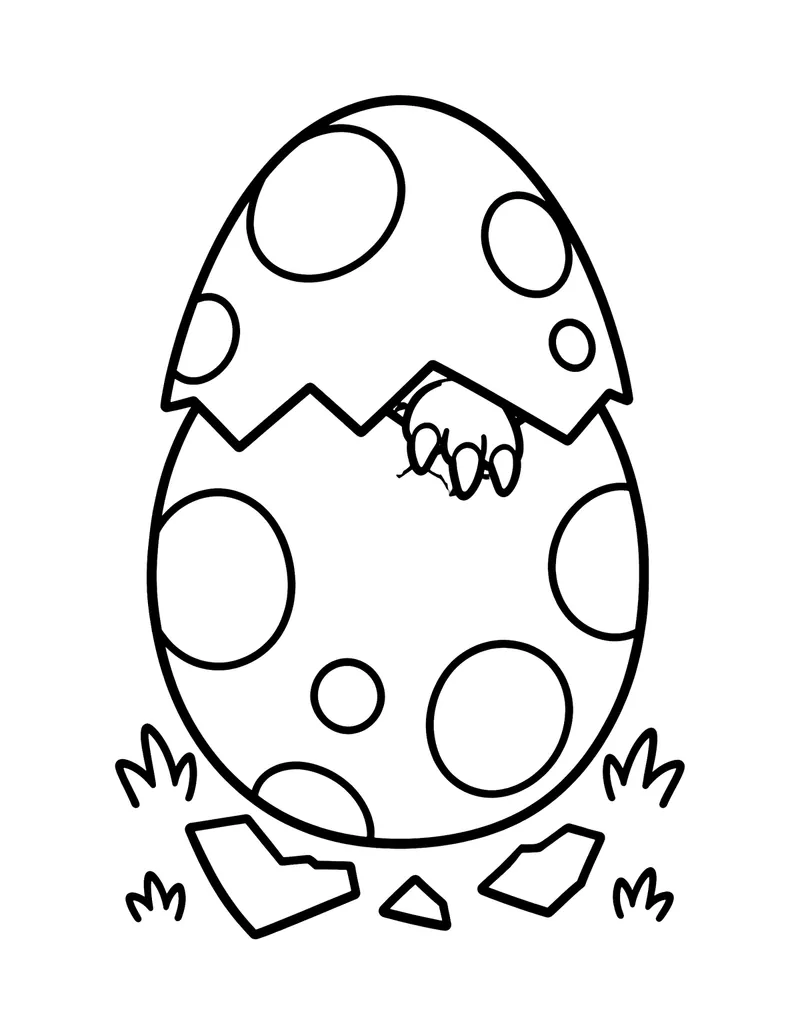 EasyNew!
Cracked Dinosaur Egg
A big spotted dinosaur egg has a zigzag crack and a tiny claw peeking out, with shell pieces on the ground.
Download PDFDinosaur Mandalas and Zentangle
For teens and adults, this group has a dinosaur mandala, a stegosaurus zentangle, a triceratops pattern, a footprint mandala, a pattern of dinosaurs, ferns and eggs, and a skeleton zentangle. Fine pens and colored pencils bring out the details, and earthy greens and browns look great.
 DetailedNew!
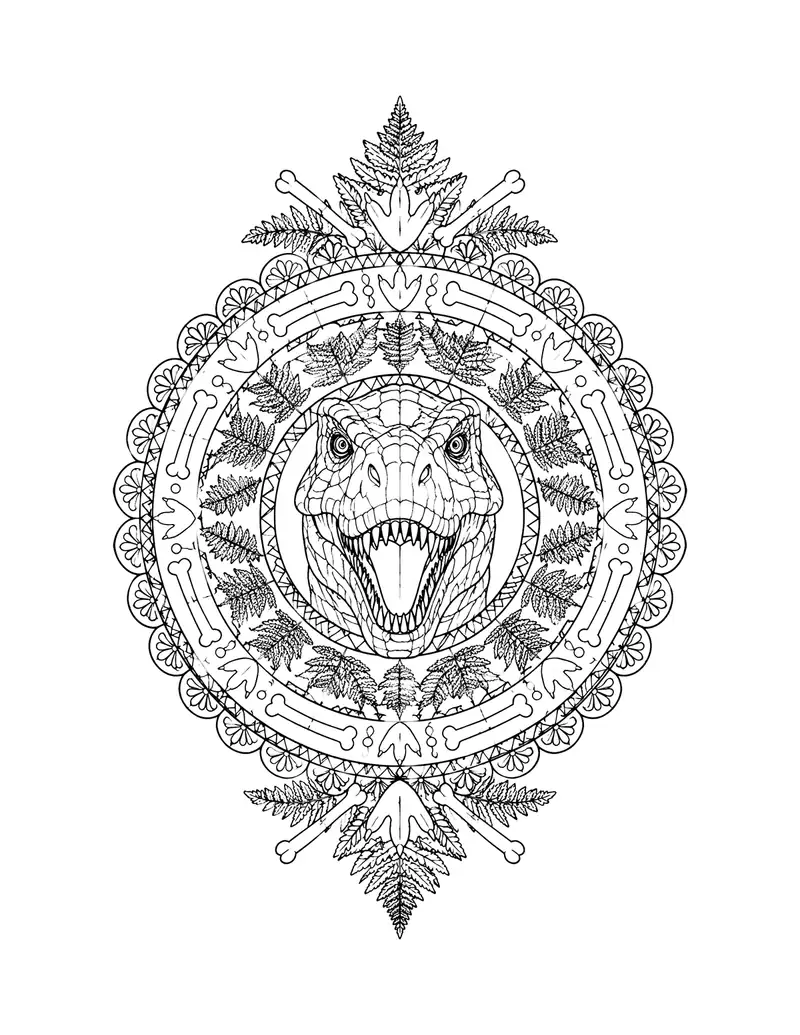
Dinosaur Mandala
A round mandala has a dinosaur head in the center, with rings of ferns, footprints, and bones and a leafy outer border.
Download PDF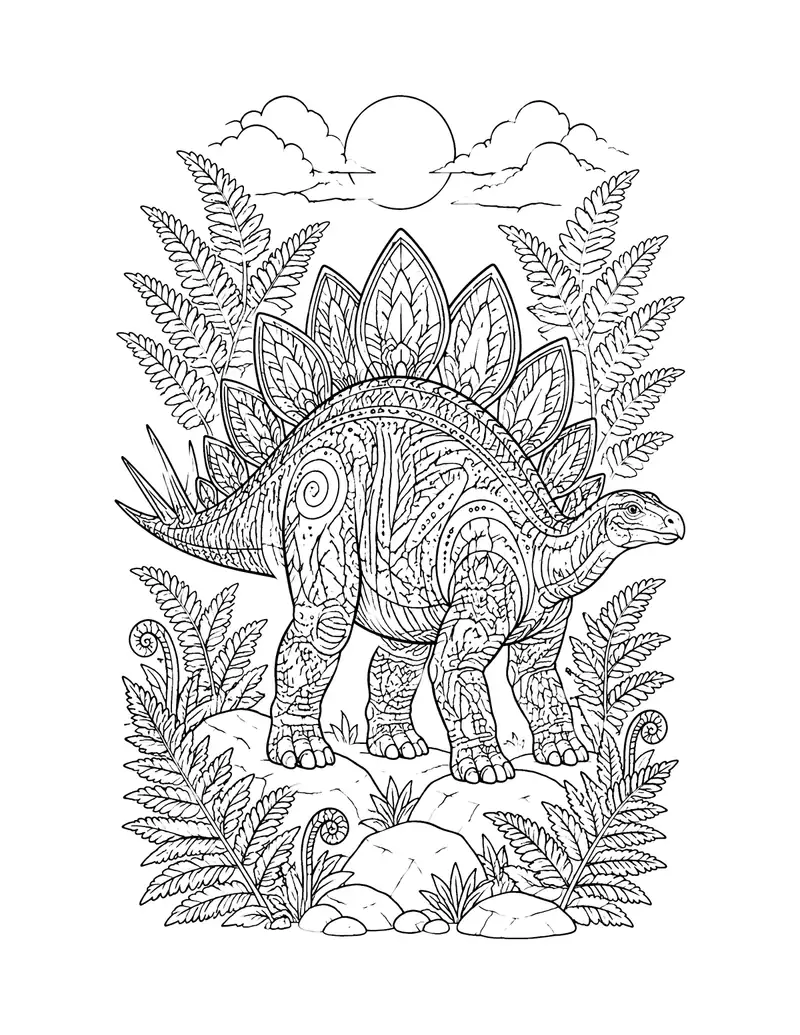 DetailedNew!
Stegosaurus Zentangle
A stegosaurus has a body and back plates filled with zentangle patterns, with ferns and rocks around and a sun above.
Download PDF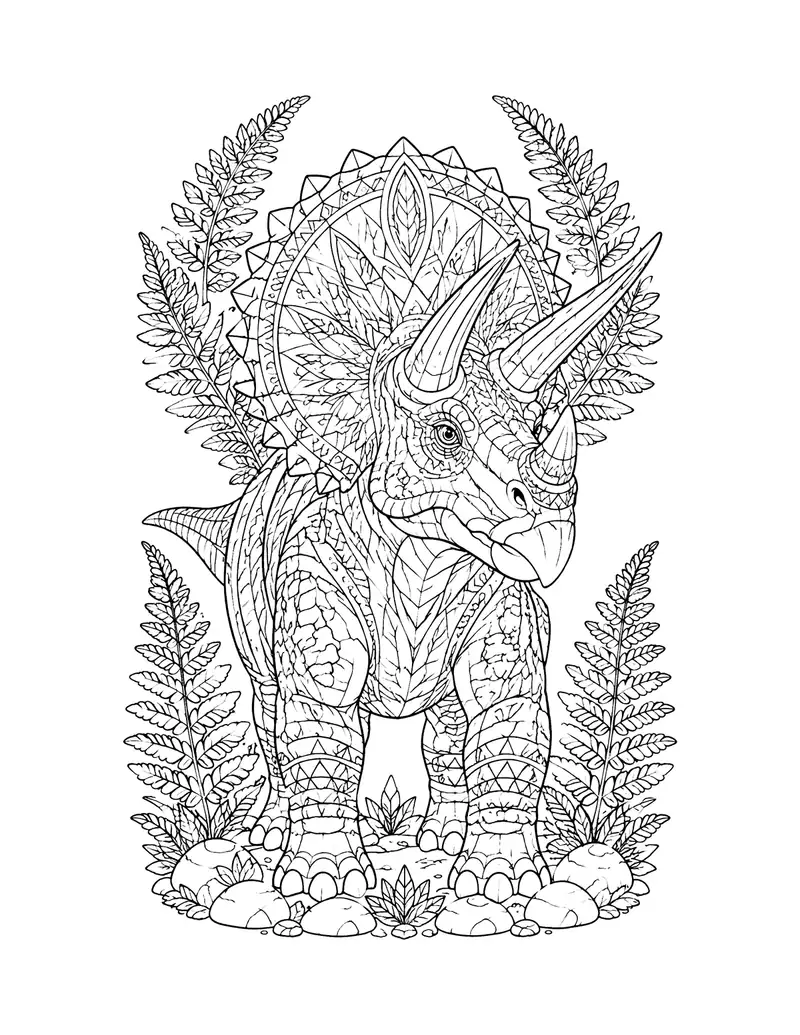 DetailedNew!
Triceratops Pattern
A triceratops has a frill decorated with geometric patterns and stands among symmetrical ferns and small stones.
Download PDF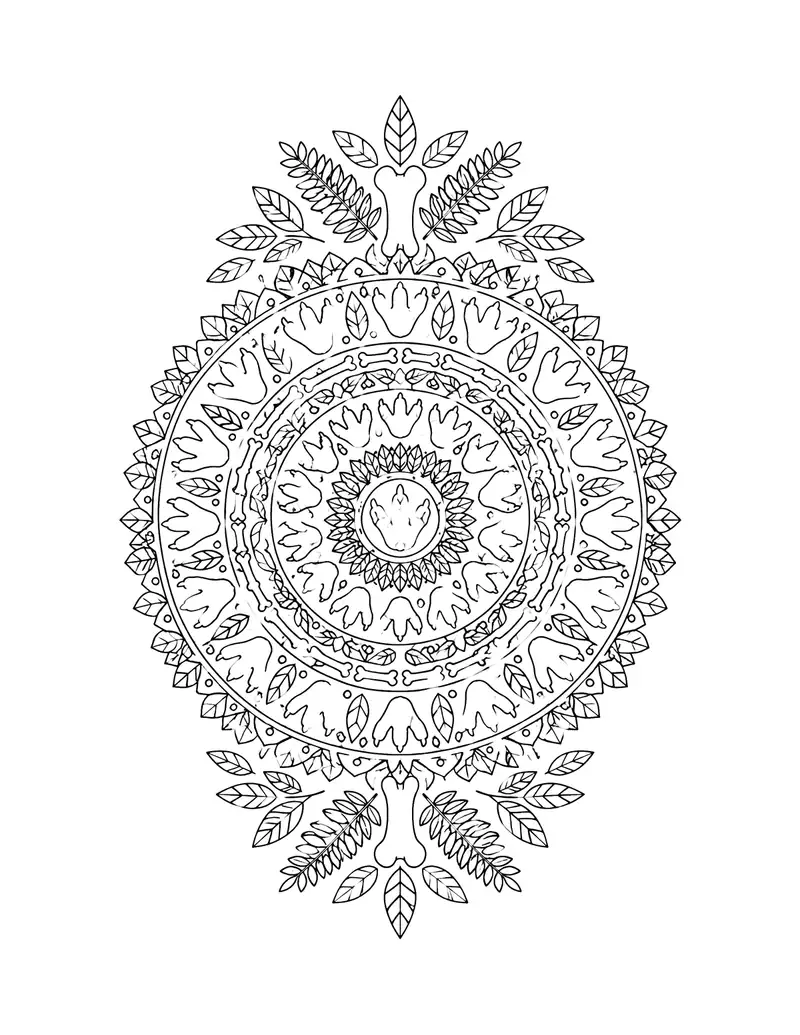 DetailedNew!
Footprint Mandala
A round mandala is built from dinosaur footprints, bones, and leaves in concentric rings, with a small dinosaur at…
Download PDF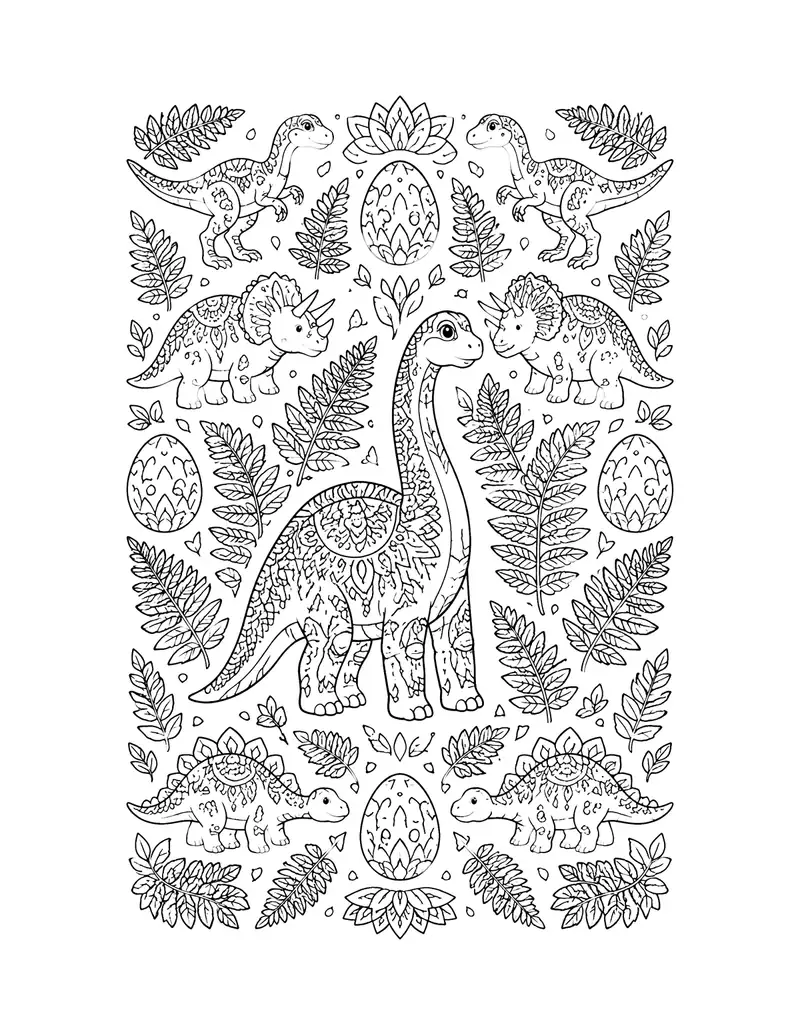 DetailedNew!
Ferns and Dinosaurs Pattern
A full-page repeating pattern shows small dinosaurs, ferns, and eggs in a neat balanced layout with a larger…
Download PDF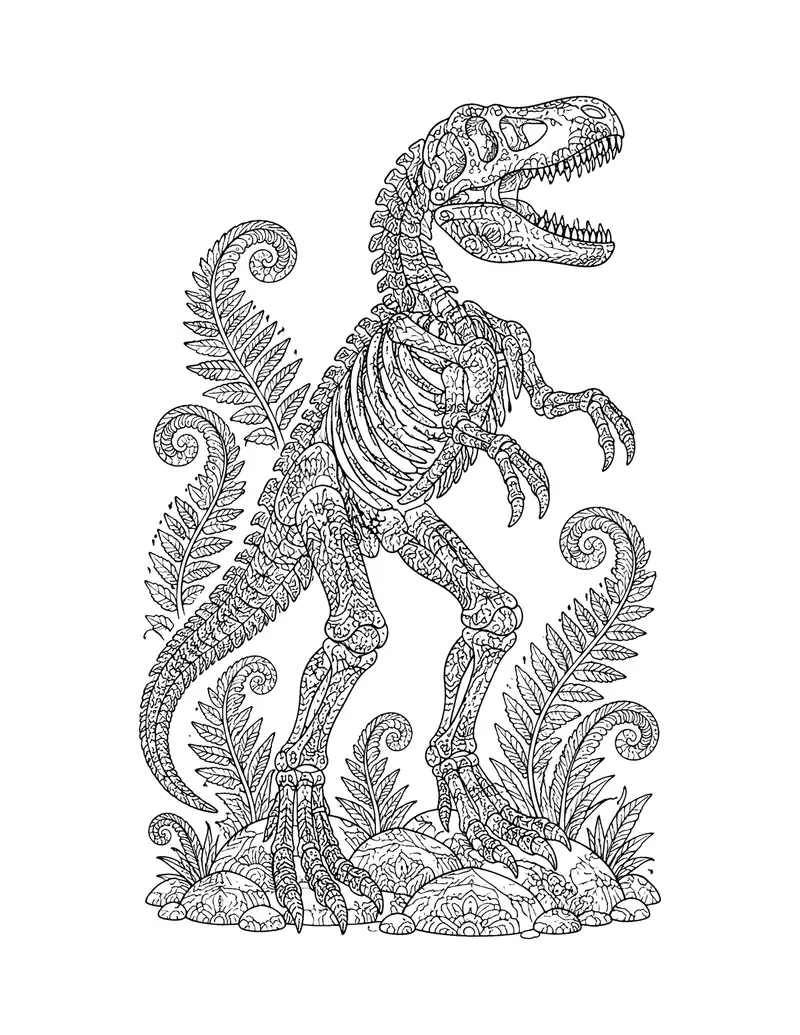 DetailedNew!
Dinosaur Skeleton Zentangle
A dinosaur skeleton has bones filled with zentangle patterns and stands among curling ferns and rocks.
Download PDFDinosaur Coloring Pages FAQ
Were pteranodons and plesiosaurs dinosaurs?
No. Pteranodons were flying reptiles called pterosaurs, and plesiosaurs, ichthyosaurs, and mosasaurs were marine reptiles. They lived at the same time as dinosaurs but belong to different groups. The flying and swimming group shows these animals, so kids can talk about the difference.
What is the difference between plant eaters and meat eaters?
Plant eaters like triceratops and stegosaurus had teeth made for chewing plants, while meat eaters like allosaurus and velociraptor had sharp, curved teeth and claws. Compare the two groups on this page and notice the shape of the heads and legs.
How do scientists know what dinosaurs looked like?
Scientists study fossil bones, footprints, eggs, and sometimes skin and feather impressions. Feather marks have been found on some dinosaurs, which is why the velociraptor page has feathers. The fossils group lets kids color a skeleton, footprints, and an ammonite.
Which colors make dinosaur scales and plates stand out?
Use two shades of green or brown, add small dots or scales with a darker pencil, and make the belly lighter than the back. A little gray shading around the legs and tail gives the dinosaur weight and makes it stand out from the ferns.
Did dinosaurs lay eggs?
Yes, dinosaurs laid eggs, and scientists have found fossil nests with many eggs. The nest page shows a mother dinosaur guarding five eggs, and the cracked egg page shows a tiny claw peeking out of a shell.